Feeling exhausted after a full night’s sleep, becoming short of breath on the stairs, or struggling to concentrate can be frustrating – especially when life is already busy. When blood tests show low iron, the choice between iron infusion versus tablets is not simply about which treatment works faster. It depends on why your iron is low, how severe the deficiency is, your symptoms, your medical history and how well your body can tolerate or absorb iron.
A GP can help identify the cause of iron deficiency and recommend treatment that is safe and appropriate for you. For many people, tablets are an effective starting point. For others, an iron infusion may be the better option.
Why low iron needs proper assessment
Iron helps your body make haemoglobin, the protein in red blood cells that carries oxygen. When iron stores are low, you may develop iron deficiency with or without anaemia. Symptoms can include tiredness, reduced exercise tolerance, dizziness, headaches, pale skin, restless legs, hair shedding or difficulty concentrating. Some people have few or no symptoms.
These symptoms can also occur for many other reasons, so it is best not to self-diagnose or start high-dose iron without advice. A blood test can assess iron stores, often including ferritin, as well as your full blood count and other tests where needed.
Finding the cause matters just as much as replacing the iron. Heavy periods are a common reason for low iron, but dietary intake, pregnancy, frequent blood donation, coeliac disease, bowel conditions, stomach surgery and bleeding from the gastrointestinal tract can also play a role. In men and post-menopausal women, iron deficiency may need particular investigation to rule out blood loss.
Iron infusion versus tablets: the key differences
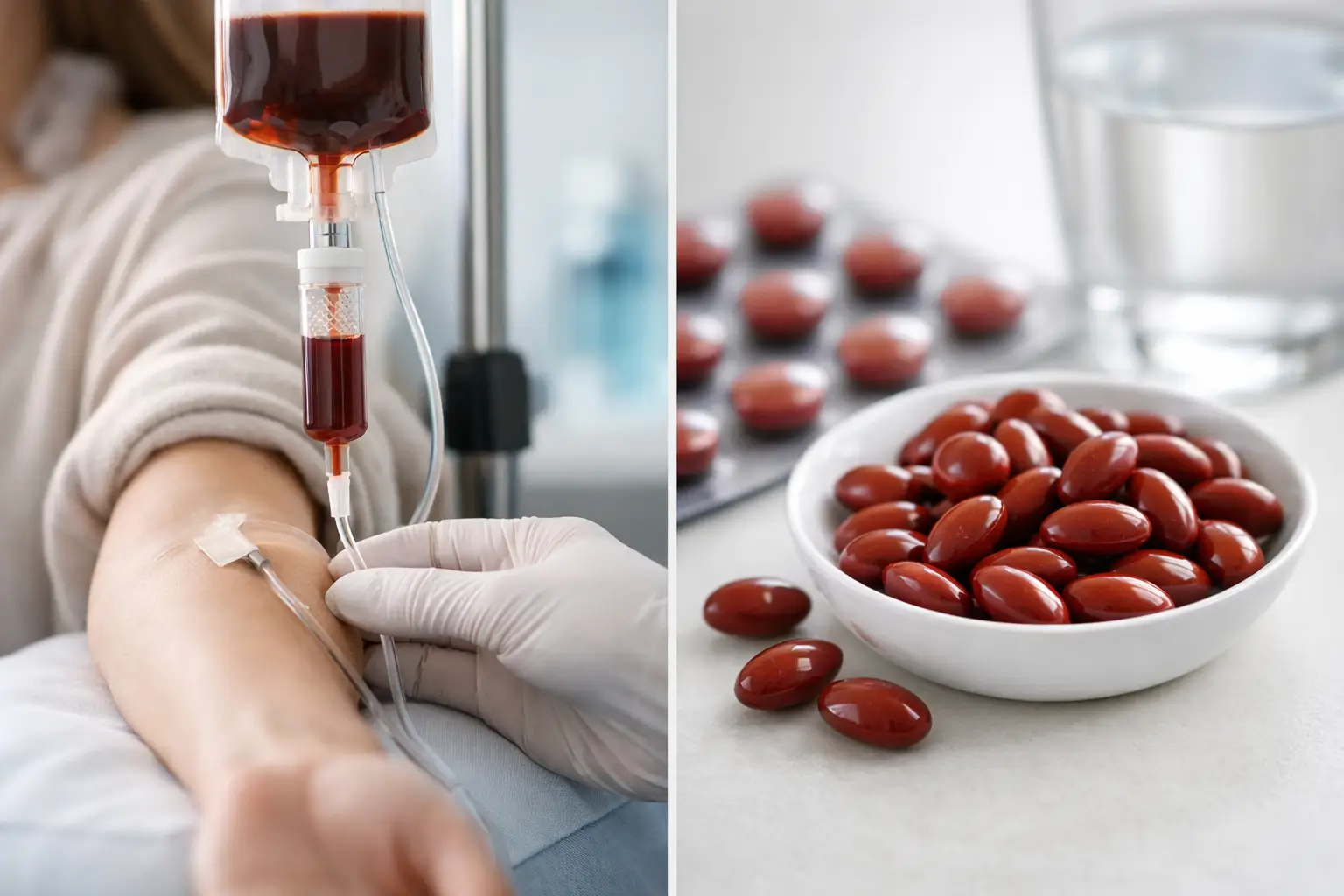
Iron tablets deliver iron gradually through the digestive system. They are usually taken over several months to rebuild iron stores and may be suitable for mild to moderate deficiency when absorption is expected to be normal.
An iron infusion delivers iron directly into a vein, usually during a planned appointment. It bypasses the digestive system and can replace a larger amount of iron in a shorter time. This can be useful when tablets are not suitable, have not worked, or when iron needs to be replaced more promptly.
Neither option is automatically best for everyone. An infusion is not generally a first step simply because someone feels tired, and tablets are not always the right answer just because they are convenient. Your treatment plan should follow a clinical assessment and blood results.
When iron tablets may be suitable
For many patients, oral iron tablets are an effective and practical treatment. They can be prescribed or recommended by a clinician, are taken at home, and avoid the need for an infusion appointment.
Tablets may be considered when iron deficiency is mild, the underlying cause is being managed, and there is enough time for stores to recover gradually. Your GP may recommend a particular dose and schedule, as taking more iron does not always mean your body absorbs more. Some people are advised to take iron on alternate days to improve tolerance and absorption, but the right approach varies between patients.
The main drawback is gastrointestinal side effects. Iron can cause nausea, constipation, stomach discomfort, diarrhoea or darker stools. These effects are usually not harmful, but they can make treatment difficult to continue. Iron absorption can also be affected by certain foods, drinks and medicines. Your GP or pharmacist can explain how and when to take your tablets based on the product you have been prescribed.
It also takes time. Some people notice improved energy before their iron stores are fully restored, but blood results and symptoms should be reviewed as advised. Stopping tablets as soon as you feel better may mean iron stores do not have time to recover.
When an iron infusion may be recommended
An iron infusion may be appropriate if tablets cause significant side effects, are not absorbed well, or have not improved iron levels despite being taken as directed. It may also be considered for people with ongoing blood loss, inflammatory bowel disease, coeliac disease, previous bariatric surgery or other conditions that affect absorption.
Your clinician may recommend an infusion when iron deficiency anaemia is more severe, when symptoms are affecting day-to-day function, or when there is a need to improve iron levels more efficiently. This can include some situations during pregnancy, although the timing and suitability of treatment in pregnancy must be assessed individually.
An infusion can be helpful, but it is not an instant energy treatment. Your body still needs time to make healthy red blood cells and respond to the iron provided. Some people feel an improvement within days or weeks, while for others recovery is more gradual. Follow-up blood tests help confirm that treatment has worked and that the underlying cause is being addressed.
What happens during an iron infusion?
Before an infusion, your doctor will review your results, medical history, current medicines and any allergies or past reactions. The type and dose of intravenous iron are selected based on your iron levels, body weight and clinical needs.
During the appointment, a nurse places a small cannula into a vein in your arm and the iron is given through a drip. The infusion itself may take from around 15 minutes to longer depending on the product and dose, followed by an observation period. You will be monitored for any signs of a reaction.
Most people tolerate iron infusions well. Possible side effects include headache, nausea, flushing, muscle or joint aches, changes in taste, or temporary fatigue. Rarely, a serious allergic-type reaction can occur, which is why infusions should be administered in a suitable clinical setting with trained staff and monitoring.
Some intravenous iron products can also lower phosphate levels in the blood, particularly after repeat treatment. This is not a reason to avoid an infusion when it is clinically needed, but it is one of the factors your doctor considers when choosing a product and arranging follow-up.
Cost, convenience and follow-up
Tablets are often the lower-cost and simpler option, but they require consistency over time. An infusion may involve a longer appointment and different out-of-pocket costs depending on the treatment, eligibility and pathology requirements. It can, however, be more convenient for someone who cannot tolerate tablets or needs a more efficient replacement strategy.
Whichever treatment you have, follow-up is essential. Repeat blood tests may be arranged to check your haemoglobin and ferritin levels. If iron remains low or falls again, your GP will look at whether there is continuing blood loss, poor absorption, an untreated cause or a need for a different treatment plan.
Questions to discuss with your GP
A useful consultation starts with the practical details: how long symptoms have been present, whether periods are heavy, what your diet is like, any bowel symptoms, recent pregnancy, blood donation, medicines and previous iron treatment. Let your doctor know if tablets have upset your stomach or if you have found it hard to take them consistently.
You can also ask what your blood results show, whether further investigation is needed, how long treatment is likely to take, and when your levels should be checked again. This helps make the decision about treatment clear rather than relying on symptoms alone.
At Parkmore Medical Centre, iron treatment can be considered as part of a broader GP assessment, helping ensure that low iron is managed with both the right replacement option and appropriate follow-up. If persistent tiredness or other symptoms are affecting your routine, booking a consultation is a practical first step towards finding the cause and choosing care that fits your needs.