
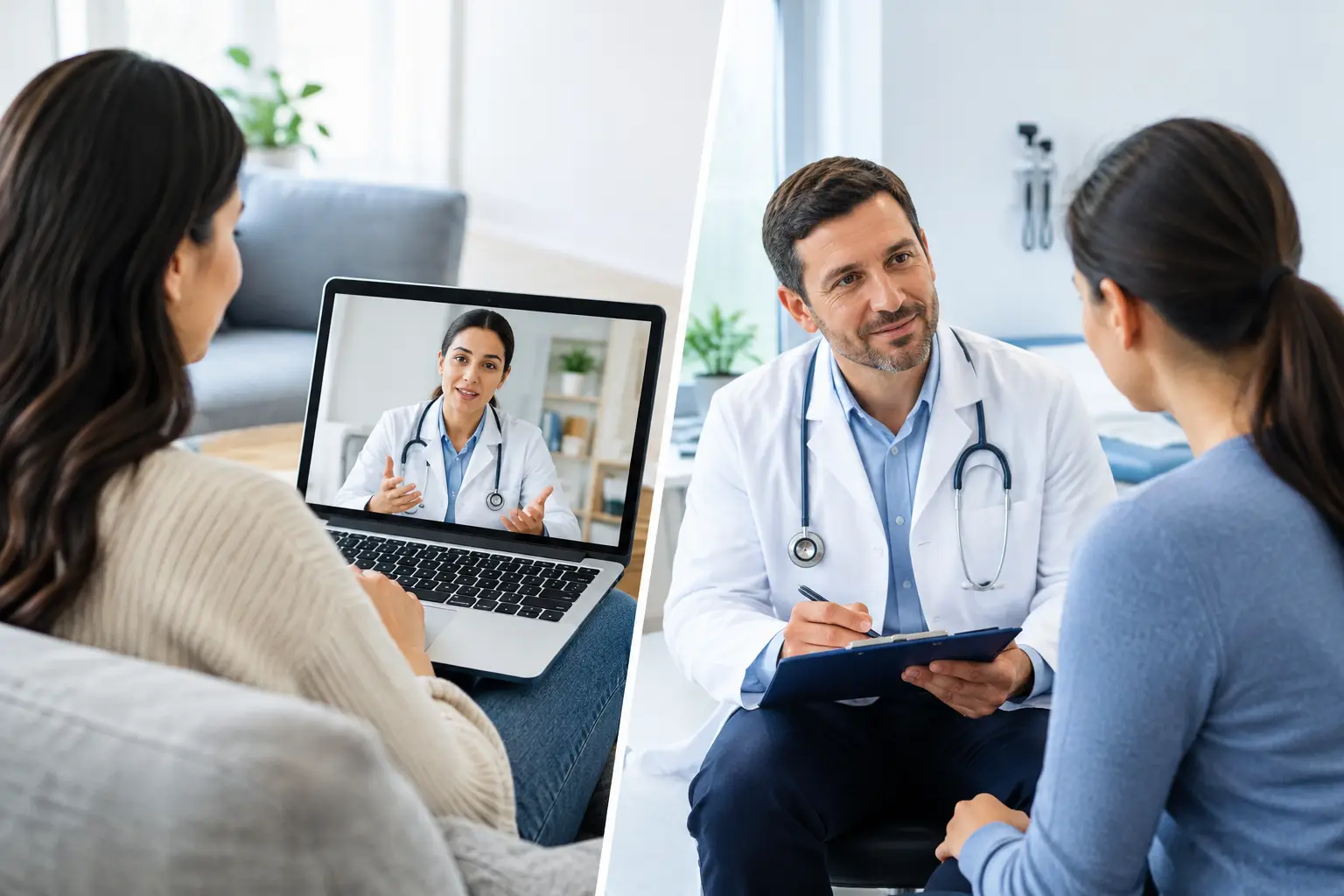
A sore throat before work, a repeat prescription that cannot wait, a child with a new rash, or ongoing blood pressure checks can all raise the same question: is a phone or video appointment enough? When considering telehealth versus clinic consultation, the best option is not always the quickest one. It depends on what is happening, whether an examination is needed, and how well your clinician knows your health history.
For many everyday concerns, telehealth offers a practical way to speak with a GP without travel or time in a waiting room. For other concerns, seeing a doctor in person gives your care team information that a screen or phone call simply cannot provide. Knowing the difference can help you get the right care without unnecessary delays.
Telehealth versus clinic consultation: the key difference
A telehealth consultation lets you speak with a GP by phone or video. It can be particularly helpful when you are managing a familiar issue, need follow-up advice, are caring for children at home, have limited mobility, or cannot easily step away from work. A good telehealth appointment is still a medical consultation. Your doctor will ask questions, review relevant records, discuss treatment options and advise whether you need tests, medication or an in-person review.
A clinic consultation takes place face to face. It allows the GP to assess what they can see, hear and feel during an examination. This may include checking your temperature, blood pressure, heart and lungs, ears, throat, skin, joints or abdomen. Your doctor may also arrange pathology, an ECG, imaging or nursing care where appropriate.
Neither format is automatically better. Telehealth is often ideal for straightforward follow-up and discussion. In-person care is generally the safer choice when symptoms are new, worsening, difficult to describe, or likely to need an examination.
When telehealth can be a sensible choice
Telehealth works best when the main value of the appointment is conversation, review or planning. For example, it may suit a discussion about recent test results, a medication review where you are feeling well, mental health support, a medical certificate assessment, or follow-up for a condition your GP has already examined.
It can also be useful for people managing long-term health conditions. Regular conversations about blood pressure readings taken at home, blood glucose results, asthma plans, diet changes or medication side effects can help maintain continuity between clinic visits. Your GP may ask you to keep a record of measurements and symptoms, then decide whether a face-to-face review is needed.
For parents, telehealth can provide timely advice when a child has a mild, familiar illness and is otherwise alert, drinking fluids and comfortable. A GP can help you understand what to watch for and when the child should be seen. However, very young children and children who appear unwell often need an in-person assessment sooner rather than later.
The practical benefit matters too. A phone consultation can reduce time away from work, school and caring responsibilities. It may be especially convenient for patients across Keysborough and nearby south-eastern suburbs who need advice but do not require a physical examination that day.
When a clinic consultation is usually the better option
Some health concerns need more than a detailed description. A GP may need to look closely at a rash, listen to breathing, examine an injury, check circulation, take vital signs or assess how a person is moving and responding. In these situations, an in-person consultation can lead to a more confident diagnosis and a clearer treatment plan.
Book a clinic appointment where possible for new or significant symptoms such as chest discomfort, ongoing shortness of breath, severe ear pain, abdominal pain, a concerning skin lesion, unexplained weight loss, persistent fever, vaginal bleeding, a new lump, or a wound that may be infected. Face-to-face care is also generally needed for procedures, vaccinations, cervical screening, iron infusions, IUD care, comprehensive health assessments and many travel medicine appointments.
A clinic visit is valuable when several issues need attention at once. A patient managing diabetes, high blood pressure and medication changes may benefit from having observations checked, pathology discussed and a care plan updated in one coordinated appointment. This is where a regular general practice can make care feel less fragmented.
If you are unsure whether your concern needs an examination, it is reasonable to ask when booking. The clinic team can guide you towards the appointment type that best matches your needs.
What telehealth cannot replace
Video can be useful, but it has limits. Lighting can make skin changes hard to judge. A mobile camera cannot reliably show whether a throat is inflamed, whether a joint is unstable or whether a mole has features that need closer assessment. Phone consultations have further limits because your GP cannot see facial expressions, movement or visible symptoms.
Telehealth also relies on clear communication. It may be less suitable if you have difficulty hearing, need an interpreter, are feeling distressed, or are discussing a sensitive concern and do not have a private place to talk. A clinic consultation can offer more support, particularly when a nurse, allied health professional or diagnostic service may be involved.
This does not make telehealth less legitimate. It simply means good care includes recognising when the consultation format needs to change. A responsible GP may begin with a telehealth assessment and ask you to attend the clinic later that day or soon after. That is a clinical decision made to protect your health, not an inconvenience.
How to make either appointment more useful
A little preparation helps your GP focus on what matters. Before a telehealth appointment, have your medication list, recent home readings and key questions nearby. If you are discussing a visible concern, such as a rash, be ready to describe when it started, whether it is spreading, and whether there is pain, itch, fever or swelling. Good lighting and a quiet, private space can make a video consultation more effective.
For a clinic visit, bring relevant results, a list of medicines and any information from another health provider. If you need help with more than one issue, let reception know when booking so enough time can be allowed. Longer or more complex appointments can give your GP the space to properly address preventive care as well as the problem that brought you in.
In either setting, be direct about changes in your symptoms and any concerns you have. A clinician can only make decisions from the information available, and details that may seem small to you can be clinically important.
Safety comes first
Telehealth is not appropriate for an emergency. Call Triple Zero (000) or attend the nearest emergency department for severe chest pain, signs of stroke, serious breathing difficulty, heavy bleeding, loss of consciousness, a severe allergic reaction, or immediate concerns about safety. Do not wait for a routine appointment if symptoms are severe or rapidly getting worse.
For urgent but non-emergency issues, a same-day clinic assessment may be the right pathway. If you are uncertain, contact the practice for advice on the most appropriate next step.
Choosing care that supports the bigger picture
The most useful question is not simply, “Can this be done by telehealth?” It is, “What will help my GP make the safest and most helpful decision?” A phone or video appointment may be exactly right for a review, a conversation or a plan. A clinic consultation may be more suitable when hands-on assessment, tests or coordinated services are needed.
At Parkmore Medical Centre, the aim is to make both options work around your health needs, while keeping your care connected to the clinicians and records that know your history. If you are weighing up an appointment type, choose the option that gives you enough time, privacy and clinical support to address the concern properly. When in doubt, a face-to-face assessment can provide welcome reassurance and a clearer path forward.