
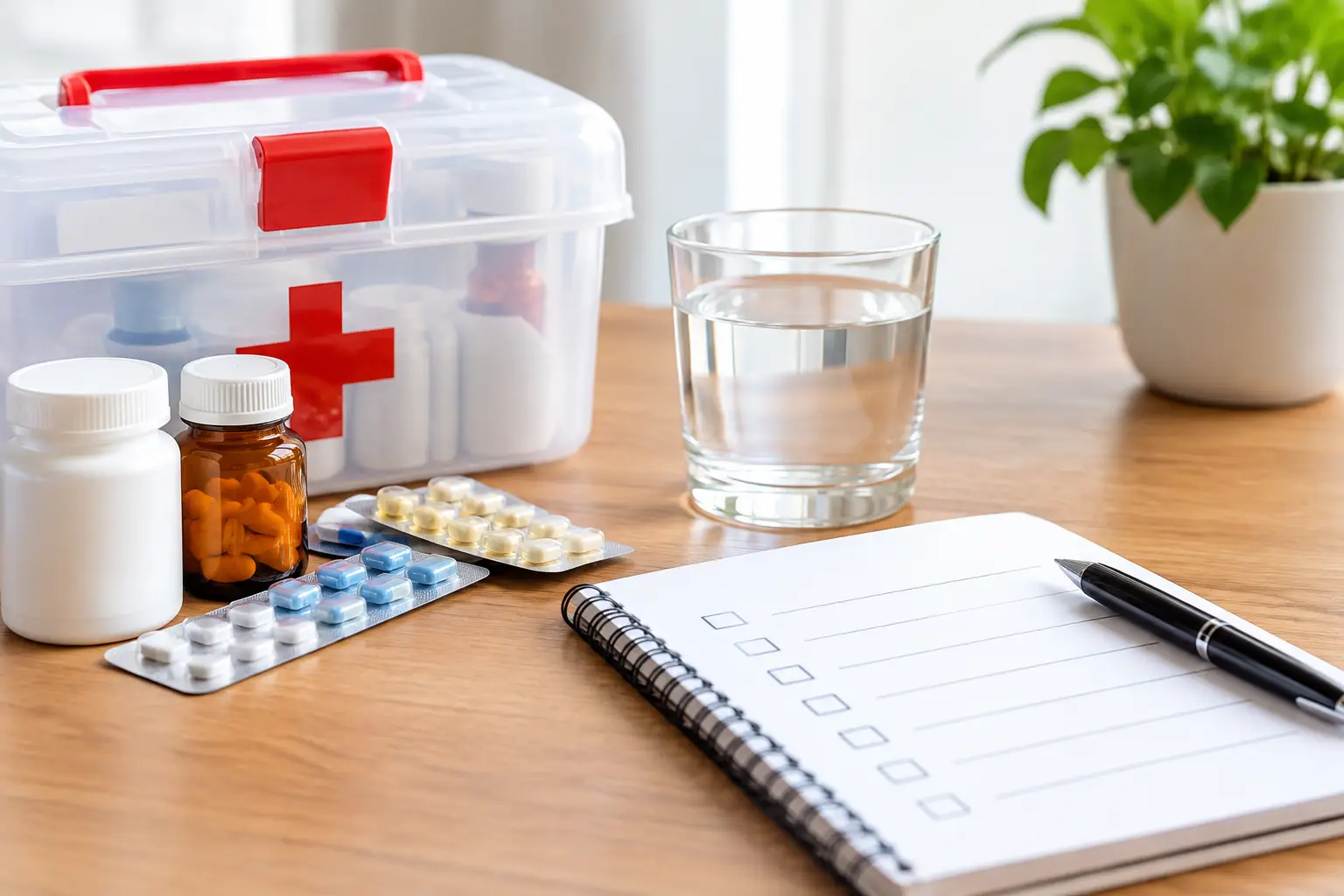
A missed dose, two medicines with similar names, or tablets kept in the bathroom cabinet can seem like small details. Yet these are common ways medication errors happen at home. This medication safety checklist can help you and your family use prescription, over-the-counter and complementary medicines with greater confidence.
Medicines are an essential part of care for many people, particularly those managing ongoing conditions. They also need regular attention. Your medicines may change after a hospital visit, when you see a specialist, or as your health needs change. A few practical habits can reduce confusion and make it easier for your GP, pharmacist and other health professionals to provide safe, coordinated care.
Medication safety checklist: start with one clear list
Keep an up-to-date list of every medicine you take. Include prescribed medicines, pharmacy products, vitamins, herbal remedies, supplements, creams, eye drops and inhalers. Write down the medicine name, strength, dose, when you take it and why you use it.
Your list should also record any medicine allergies or previous side effects. If you are unsure whether a reaction was an allergy or a side effect, note what happened and discuss it with your GP or pharmacist. This detail can affect which treatments are suitable in future.
Take the list to GP appointments, specialist visits, hospital admissions and pharmacy consultations. A photo saved on your mobile can be useful, but a printed copy is helpful too, especially for older family members or in an urgent situation. If you care for a child, partner or parent, make sure their list is available to the people who may need it.
Take each medicine as directed
The label, prescription and advice from your clinician should guide how you take a medicine. Do not assume that a medicine is safe to take more often because it is available without a prescription. Pain relief, cold and flu products, sleep aids and some supplements can interact with other medicines or may not suit certain health conditions.
Before starting a new medicine, ask what it is for, how and when to take it, how long you should use it, and what side effects need prompt advice. It is also worth asking whether it should be taken with food, whether alcohol should be avoided, and what to do if you miss a dose.
Avoid sharing medicines with family members or using someone else’s leftover tablets. Even when symptoms sound similar, the right treatment and dose can differ based on age, weight, pregnancy, other health conditions and current medicines. Antibiotics, in particular, should only be taken when prescribed for you and should not be saved for another illness.
If you have trouble swallowing tablets, opening packaging, remembering doses or paying for medicines, tell your GP or pharmacist. There may be alternatives, such as a different formulation, a simpler schedule or a staged supply arrangement. The safest plan is one you can realistically follow.
Be especially careful with similar products
Many medication mistakes occur when two products contain the same active ingredient. For example, a cold and flu product may already contain pain relief, so adding another painkiller could mean taking more than intended.
Read the active ingredients, not just the brand name. Check with a pharmacist before combining products for pain, allergies, coughs, colds or sleep. This is particularly important for children, older adults, people who are pregnant or breastfeeding, and anyone with kidney, liver, heart or stomach conditions.
Store medicines safely at home
Store medicines in their original packaging with the label intact. The label contains the instructions, expiry date and your name, and the original container helps prevent mix-ups. Keep medicines out of reach and sight of children, ideally in a locked cupboard.
A bathroom cabinet is not always the best place for medicines. Heat and moisture from showers can affect some products. A cool, dry cupboard away from direct sunlight is often more suitable, unless the label says the medicine needs refrigeration. Medicines that require the fridge should be stored as directed, away from food where practical and out of children’s reach.
Do not leave medicines in a hot car, handbag, kitchen bench or bedside drawer where children and visitors may access them. If you use a weekly dose organiser, keep the original packs nearby and make sure the organiser is clearly labelled and securely stored. Dose organisers can be helpful, but they are not appropriate for every medicine and should be filled carefully.
Build a routine that reduces missed or doubled doses
A consistent routine can make medicines easier to manage. Some people link doses to a daily activity, such as breakfast or brushing their teeth. Others use a mobile reminder, calendar, medication chart or pharmacist-prepared pack. The best approach depends on your schedule, the number of medicines you take and whether your dose times need to be flexible.
If more than one person in the household takes regular medicines, keep each person’s medicines separate. Similar boxes, blister packs and bottles can be confused, especially during busy mornings or when someone is unwell. Good lighting and taking a moment to read the label can prevent an avoidable error.
If you are unsure whether you have taken a dose, do not automatically take another one. Check your medicine chart or organiser first. If you still cannot tell, call your pharmacist or GP clinic for advice. The right response varies between medicines, so there is no single rule that applies to every missed or uncertain dose.
Review medicines after changes in your health
Medication safety is not only about taking tablets correctly. It also involves checking that each medicine is still needed and working as intended. Book a medication review if you have started several new medicines, have recently left hospital, see more than one health professional, experience troublesome side effects, or find your medicine routine difficult to manage.
A review is particularly valuable for people taking multiple medicines, older adults, and people living with diabetes, heart disease, asthma, kidney disease or other long-term conditions. Your GP can review the full picture, including symptoms, test results, interactions and treatment goals. Your pharmacist can also provide practical advice about timing, storage and using devices such as inhalers.
Do not stop a prescribed medicine suddenly without medical advice, even if you feel better or are concerned about a side effect. Some medicines need to be reduced gradually, while others may need urgent adjustment. Contact your GP or pharmacist so you can make a safe plan.
Know when to seek urgent help
Call Triple Zero (000) if someone has collapsed, is having trouble breathing, has swelling of the face or throat, has a seizure, is severely drowsy or unresponsive, or may have taken a dangerous amount of medicine. If poisoning or an overdose is suspected, seek urgent advice straight away and keep the medicine packet or container with you if possible.
For new but non-urgent symptoms, such as a rash, dizziness, nausea, unusual bleeding or a change in mood, contact your GP or pharmacist promptly. The cause may be the medicine, the dose, an interaction or the health condition being treated. Early advice can often prevent a problem from becoming more serious.
Dispose of unwanted medicines properly
Check your medicine cupboard regularly and remove expired, damaged or no-longer-needed products. Do not put medicines in household rubbish, flush them down the toilet or give them to someone else. Take unwanted medicines to a pharmacy for safe disposal.
This also includes leftover antibiotics, old pain medicines, expired creams and medicines belonging to a person who has died. Clearing these products from the home reduces the risk of accidental use, misuse and confusion with current treatments.
At Parkmore Medical Centre, your regular GP can help bring your medicines, health conditions and care from other providers into one clear plan. If your medication routine has become confusing, a review can offer reassurance as well as practical next steps. Bring your medication list or your medicine packets to your next appointment, and ask the questions that will help you use each treatment safely.