A child who wakes scratching, avoids certain clothes or has sore, cracked patches of skin needs more than a quick fix. Effective childhood eczema treatment focuses on settling the current flare, restoring the skin barrier and helping families recognise the patterns that can make symptoms worse.
Eczema is common in babies and children, and it can vary greatly. Some children have occasional dry patches, while others experience frequent, uncomfortable flares that affect sleep, school and family routines. With consistent care and advice tailored to your child, eczema can usually be managed well.
What childhood eczema looks like
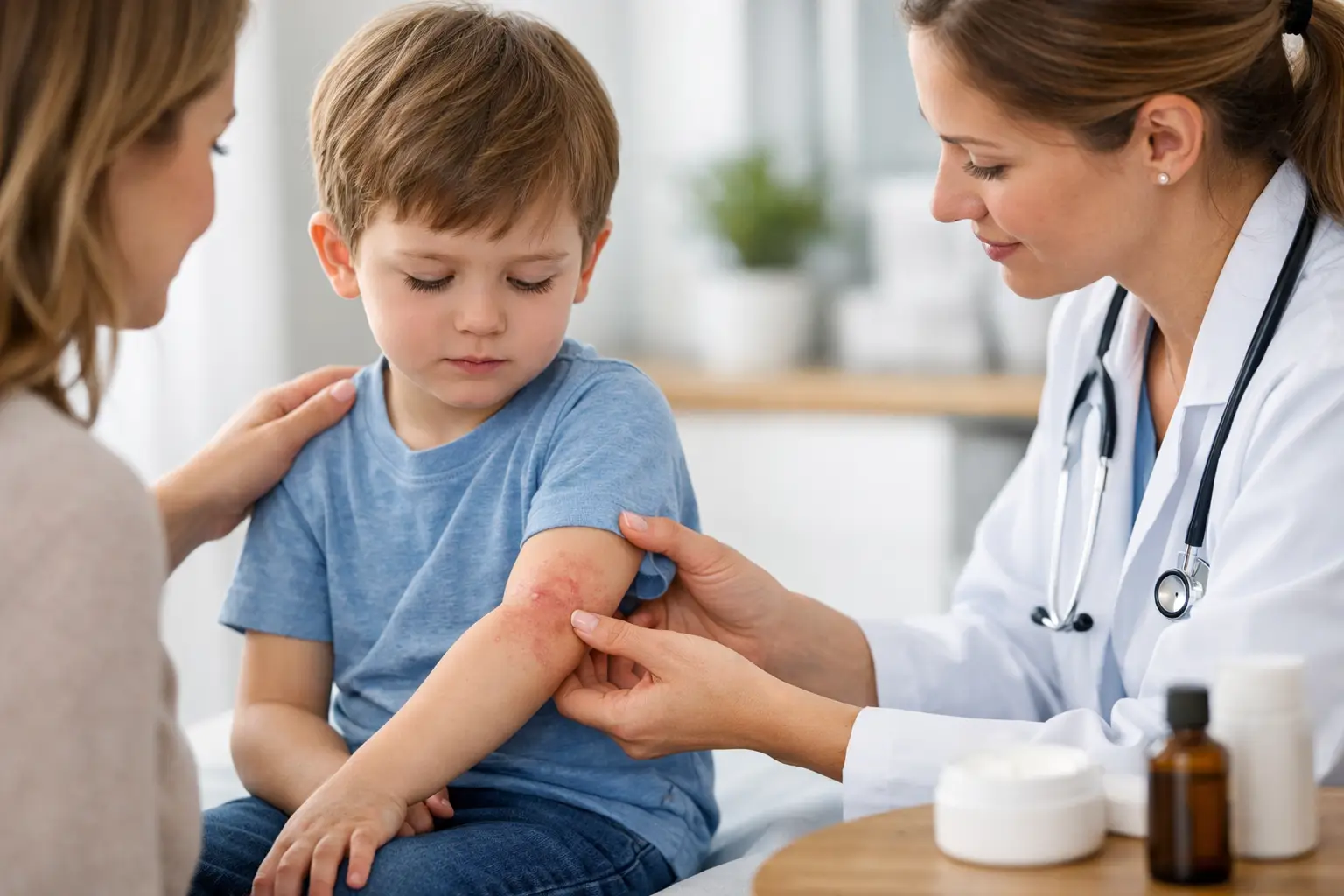
Eczema, also called atopic dermatitis, causes the skin to become dry, inflamed and itchy. In babies it often appears on the cheeks, scalp and outer arms or legs. As children grow, it may be more noticeable in the creases of the elbows and knees, on the wrists, hands, ankles or neck.
Skin can look red, rough, flaky or weepy. In children with darker skin tones, eczema may appear purple, grey, darker brown or as areas of uneven colour rather than bright red. Itching is often the symptom children feel most strongly, and scratching can damage the skin further. This creates an itch-scratch cycle that is hard to break without a regular treatment plan.
Eczema is not caused by poor hygiene and it is not contagious. It often occurs in children with a personal or family history of eczema, asthma, hay fever or allergies, although not every child with eczema has these conditions.
The foundation of childhood eczema treatment
The most useful daily treatment is a plain, fragrance-free moisturiser, also called an emollient. Eczema-prone skin loses water more easily than healthy skin, so moisturising is not only for visible dry patches. It is a daily way of supporting the skin barrier, including when the eczema seems settled.
Apply moisturiser liberally and often, particularly after bathing while the skin is still slightly damp. Ointments and thick creams are generally more effective for very dry skin than thin lotions, though the best product is one your child can tolerate and your family can use consistently. If a moisturiser stings, causes a rash or is difficult to apply, speak with your GP or pharmacist before simply stopping all moisturising.
Baths or showers should be brief and warm rather than hot. Harsh soap, bubble bath, fragranced body wash and heavily perfumed products can irritate sensitive skin. A soap-free wash may be suitable for areas that need cleansing. Afterwards, pat the skin dry rather than rubbing, then apply moisturiser promptly.
Keeping fingernails short can limit skin damage from scratching. Soft, breathable cotton clothing is often more comfortable than wool or rough synthetic fabrics. Overheating, sweating and scratchy tags can also aggravate symptoms, so light layers can be helpful.
Treating a flare promptly
When eczema becomes red, itchy or inflamed, moisturiser alone may not be enough. A GP may recommend a topical corticosteroid cream or ointment for the affected areas. These anti-inflammatory medicines are a standard part of eczema care and can be very effective when the right strength is used correctly.
Parents are understandably cautious about steroid creams. The key is not to avoid them when they are needed, but to use them as directed. Under-treating inflammation can leave a child itchy and distressed, increase scratching and make the flare last longer. Your GP can explain where to apply the medicine, how much to use, how long to continue and when to step down treatment.
The required strength depends on your child’s age, the location of the eczema and how severe it is. Delicate areas such as the face, eyelids, groin and skin folds need particular care. Do not use a prescription cream that was supplied for another family member, and seek advice before using stronger products on a young child.
For severe or persistent eczema, a GP may discuss other options, such as wet dressings, non-steroid anti-inflammatory creams, treatment for infection or referral to a dermatologist or paediatric specialist. The right approach depends on the child and the pattern of their eczema.
Finding your child’s eczema triggers
Eczema flares do not always have one clear cause. Dry weather, heat, sweating, viral illnesses, stress, rough fabrics and fragranced products can all play a part. Some children flare after swimming, while others find that pool water is manageable if they rinse off and moisturise straight afterwards.
Food can be a concern for families, but broad dietary restriction is rarely the answer. Food allergy is more likely to be relevant when there are immediate symptoms after eating, such as hives, swelling, vomiting, coughing or wheezing. Removing major foods without medical guidance can affect a child’s nutrition and may not improve eczema.
A simple diary can help if you suspect a repeated pattern. Note when flares happen, where they appear, recent illnesses, new products, activities and any foods associated with immediate reactions. This gives your GP useful information without assuming that every flare is caused by an allergy.
When to see a GP about eczema
Make an appointment if your child’s eczema is not improving with regular moisturising, is disrupting sleep, covers large areas, causes pain or affects their confidence and daily activities. A GP can confirm the diagnosis, check whether another skin condition may be involved and create a practical treatment plan for home, childcare or school.
Prompt review is particularly important if the skin becomes weepy, crusted, very sore, warm or swollen, or develops yellow scabs or pus. These can be signs of a bacterial skin infection and may need medical treatment. Seek urgent medical care if your child has eczema with clusters of painful blisters, fever, looks unwell, has rapidly spreading redness, or has swelling or a rash around the eyes.
Regular follow-up can be valuable for children with recurring eczema. Treatment needs can change with the seasons, growth, school routines and sport. A written plan also helps carers use moisturisers and prescribed creams consistently and confidently.
Supporting your child beyond the skin
Eczema can be tiring. Interrupted sleep may lead to irritability, poor concentration and stress for the whole household. Children may feel self-conscious about visible skin changes or frustrated when they need to stop scratching. Calm reassurance matters, as does making treatment part of a predictable routine rather than a battle at the end of the day.
For school-aged children, let teachers or carers know what helps. This may include access to moisturiser, avoiding strongly fragranced craft materials where practical, changing out of sweaty clothes after sport and understanding that eczema is not infectious. As children become older, teaching them how and when to moisturise helps them take part in their own care.
At Parkmore Medical Centre, families can speak with a GP about recurring rashes, eczema flares and a treatment plan suited to their child’s age and needs. A timely review can replace trial and error with clear, compassionate guidance, helping your child get back to more comfortable days and better nights.