
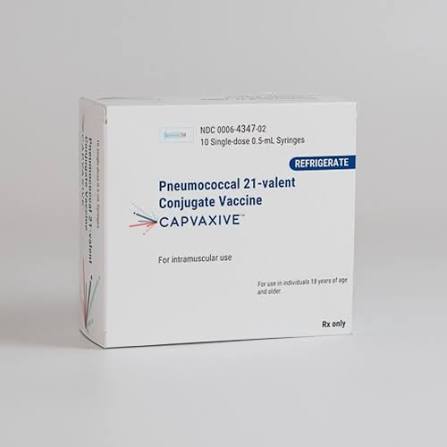
With targeted coverage against the strains responsible for over 80% of adult pneumococcal disease—and newly expanded eligibility—the 21-valent conjugate vaccine is reshaping respiratory disease prevention.
Preventing severe respiratory and bloodstream infections just became significantly more tailored. Capvaxive (also known as PCV21 or pneumococcal 21-valent conjugate vaccine), developed by Merck, is marking a major shift in how healthcare providers protect patients against Streptococcus pneumoniae.Unlike earlier vaccines that simply added as many bacterial strains as possible, Capvaxive was specifically designed through intentional serotype selection. It targets the exact bacterial strains driving the vast majority of breakthrough infections in adults today, while also offering vital defense for high-risk children and adolescents.Here is everything you need to know about the vaccine, how it compares to older options, and whether you or your family members should get vaccinated.
What is Capvaxive?
Pneumococcal disease is caused by Streptococcus pneumoniae bacteria, which can lead to severe, life-threatening conditions including invasive pneumococcal disease (IPD)—such as sepsis and meningitis—as well as non-invasive pneumonia. The bacteria surround themselves with a protective sugar coat called a capsular polysaccharide; conjugate vaccines work by training the immune system to recognize and attack these specific outer capsules.While more than 100 different serotypes (strains) of pneumococcal bacteria exist, only a fraction cause the majority of severe human infections. Capvaxive is a 21-valent conjugate vaccine, meaning it protects against 21 distinct serotypes of S. pneumoniae.It was first approved by the U.S. Food and Drug Administration (FDA) for adults, and most recently,
Why It’s a Game-Changer: "Intentional" Serotype Selection
For years, the standard approach to pneumococcal vaccines was cumulative: each generation retained all the serotypes of childhood vaccines and added a few more (e.g., PCV13 to PCV15 to PCV20). However, because widespread pediatric vaccination successfully wiped out many traditional strains in the general population, the strains making adults sick had shifted dramatically.Capvaxive took a blank-slate approach, replacing older pediatric serotypes with eight unique serotypes (15A, 15C, 16F, 23A, 23B, 24F, 31, and 35B) that were previously not covered by any approved vaccine.By the Numbers: In national epidemiologic studies, the 21 serotypes in Capvaxive account for approximately 84% of invasive pneumococcal disease cases in adults aged 65 and older. By comparison, PCV20 covers roughly 54% of the circulating strains causing adult disease.
Who Should Get Vaccinated?
Following evaluations by immunization advisory committees and health bodies, vaccination guidelines focus on protecting older adults and vulnerable younger populations:
Patient Population
Eligibility & Recommendation
Guidance Notes
All Adults Aged 65+
Universal routine recommendation for all older adults aged 65 years and older to ensure broad protection against invasive disease.
Adults Aged 19–64 with Risk Factors
Applies to adults with chronic heart, lung, or liver disease, diabetes, alcoholism, cigarette smoking, or immunocompromising conditions.
Previously Vaccinated AdultsCatch-Up / Revaccination Eligible
Adults who previously received older polysaccharide vaccines (PPSV23) or earlier conjugate vaccines (PCV13/PCV15) can receive Capvaxive ≥1 year after their last dose.
Safety and Side Effects
Capvaxive has been studied extensively across tens of thousands of participants in clinical trials (including the landmark STRIDE Phase 3 clinical program). The vaccine has demonstrated a strong safety profile comparable to other standard immunizations.The most common side effects are mild and temporary, typically resolving within a few days:
Injection-site pain, redness, or swelling (reported by ~41% of older adults in clinical trials)
Mild fatigue (~20% in older adults; higher in younger cohorts)
Headache and muscle aches
As with any vaccine, Capvaxive should not be administered to individuals with a history of severe allergic reactions (anaphylaxis) to any of its components or to diphtheria toxoid.
What This Means for Patients
The arrival and expansion of Capvaxive represent a major step forward in personalized public health. If you are 65 or older, or if you manage a chronic medical condition, you may be eligible for a single dose that provides significantly broader defense against today’s circulating bacterial threats. Check with your GP today.