
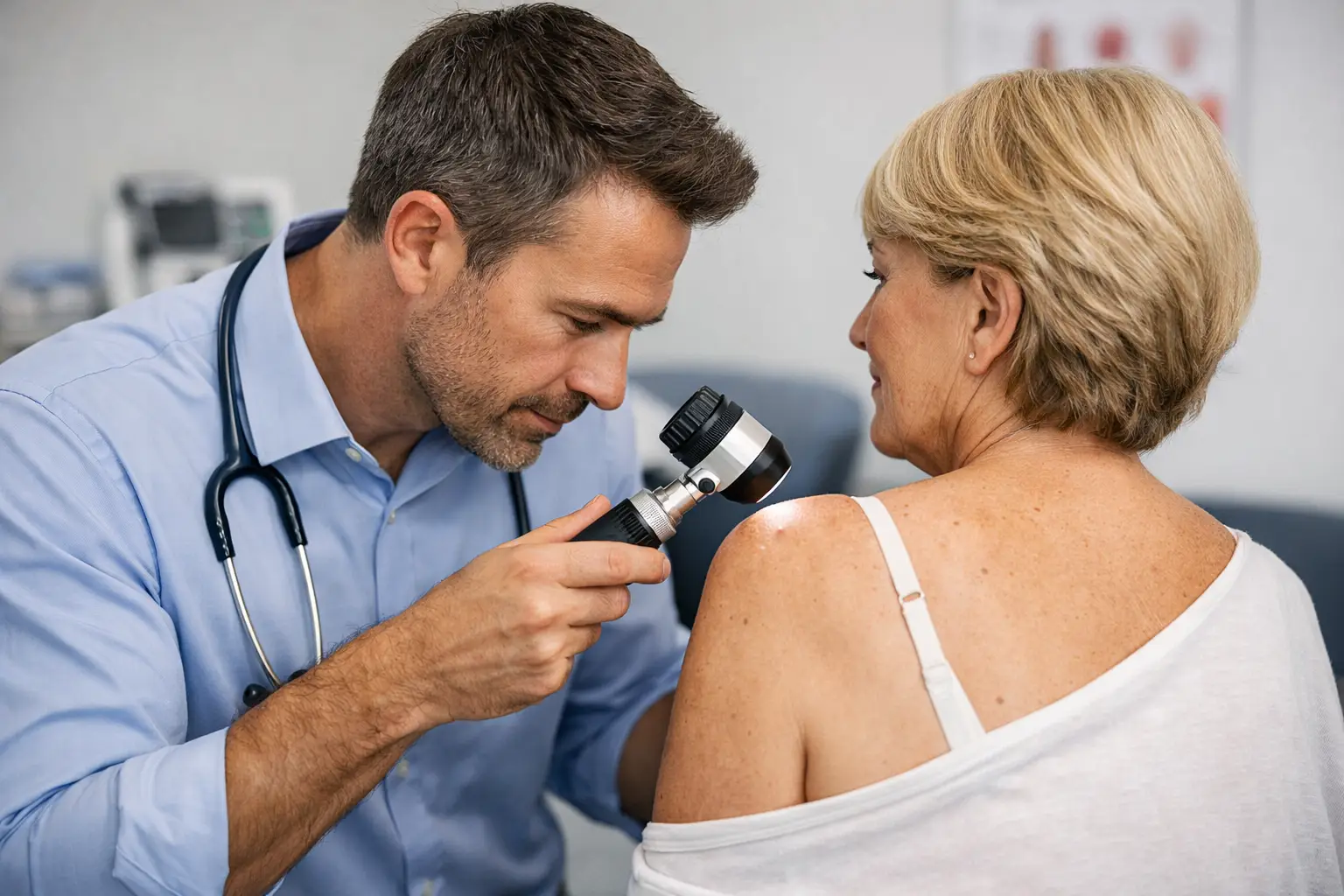
A new or changing spot can be easy to put off, particularly when life is busy. Yet Australia’s high UV exposure means skin checks are a practical part of preventive healthcare. Understanding how skin cancer checks work can make it easier to book an appointment early, ask the right questions and know what to expect.
A skin check is not just a quick look at one mole. Your GP considers your skin, your personal risk factors and any spots that have changed or concerned you. Most findings are harmless, but checking them properly can identify skin cancers and precancerous changes when treatment is often simpler.
How skin cancer checks work at your GP appointment
Your appointment usually begins with a conversation. Your GP may ask whether you have noticed a new spot, a mole that has changed, a sore that has not healed, or an area that repeatedly crusts, bleeds or feels tender. They may also ask about previous skin cancers, sunburns, time spent outdoors for work or sport, use of solariums in the past, medications that affect your immune system, and family history.
The examination itself is visual and should be tailored to you. If you have a particular spot of concern, point it out first. Depending on the reason for the appointment and your risk, your GP may examine a wider area of skin, including places that are hard to see yourself, such as the scalp, back, ears and the backs of your legs.
You may be asked to undress to your underwear or move clothing aside so the relevant areas can be checked. Your comfort and privacy matter. You can ask what will be examined, request a chaperone, or let your GP know if you would prefer to keep certain areas covered unless there is a specific reason to assess them.
Looking more closely with a dermatoscope
GPs commonly use a dermatoscope, a small handheld device with light and magnification. It allows the doctor to see colours, structures and patterns within a spot that cannot be seen clearly with the naked eye. A dermatoscope does not hurt and does not break the skin.
The doctor looks at the spot’s shape, border, colour, size and internal pattern, then compares this with features commonly seen in harmless moles, sunspots and other lesions. They also consider your age, skin type, history and whether the spot has changed. This is why a mark that looks minor to you may need closer review, while a larger long-standing spot may be reassuring on examination.
Some practices may use clinical photographs or specialised imaging to monitor particular lesions over time. These tools can be helpful when a spot is not clearly suspicious but has features worth watching. They support clinical judgement rather than replacing it.
What your GP is checking for
Skin cancer does not have one single appearance. The three main types are melanoma, basal cell carcinoma and squamous cell carcinoma, and each can present differently.
Melanoma may appear as a new or changing mole, although it can also develop in skin that previously looked normal. Basal cell carcinomas often occur on sun-exposed areas and may look like a pearly, pink or scaly bump, a persistent sore, or a spot that bleeds easily. Squamous cell carcinomas can look like rough, thickened, crusted or tender areas, particularly on the face, ears, scalp, forearms and hands.
Your GP will also look for sun damage and actinic keratoses. These are rough, scaly patches caused by sun exposure. They are common, especially as we get older, and some may need treatment or monitoring because they can develop into skin cancer over time.
The ABCDE guide can help you notice concerning changes between appointments. A spot may deserve prompt review if it shows asymmetry, an irregular border, varied colour, a growing diameter, or evolution in size, shape, colour, sensation or behaviour. For some melanomas, particularly nodular melanoma, the key warning can simply be a spot that is growing quickly, raised and different from your other marks.
These signs are a reason to arrange an assessment, not a way to diagnose yourself. Some harmless spots can look unusual, while some skin cancers do not follow the usual pattern.
What happens if a spot needs further assessment?
If your GP finds a lesion that needs more attention, the next step depends on how it looks, where it is and your medical history. Sometimes the safest option is to monitor it with clear instructions about when to return. In other situations, your GP may recommend a biopsy, removal or referral to a dermatologist or surgeon.
A biopsy involves taking a small sample of skin, or occasionally removing the whole lesion, so it can be examined in a pathology laboratory. Local anaesthetic is used, so the area is numbed first. The method may be a shave biopsy, punch biopsy or excision, depending on the lesion and where it is located.
It can feel worrying to hear that a biopsy is recommended, but it does not mean you have cancer. It means the doctor needs a definite answer. Pathology is the most reliable way to confirm whether a suspicious lesion is harmless, precancerous or cancerous, and it guides the appropriate treatment.
Your GP should explain why they are recommending the procedure, what the wound care involves, whether you may need stitches, and how you will receive your result. If cancer is confirmed, your care plan may involve further treatment at the practice or referral to the most appropriate specialist. Coordinated follow-up is important, particularly if you have had more than one skin cancer or have a higher ongoing risk.
How often should you have a skin check?
There is no single timetable that suits everyone. The right frequency depends on your individual risk and what your doctor finds. A person with a previous melanoma, multiple skin cancers, a strong family history, fair skin that burns easily, many moles, significant outdoor sun exposure or a weakened immune system may need regular professional checks.
For other people, it may be appropriate to book a check when they notice a new, changing or symptomatic spot, and to ask their GP what routine schedule makes sense for them. Children can also develop unusual spots, although skin cancer is far less common in children than adults. Parents should arrange a review if a child has a concerning new or changing lesion.
Do not wait for a routine appointment if a spot is rapidly changing, bleeding without clear cause, persistently painful, or not healing. Booking a standard consultation promptly is usually the right first step, and the clinic can advise if more urgent assessment is needed.
Preparing for a skin check
You do not need to do much preparation. If possible, avoid heavy make-up or nail polish on areas you would like checked, as these can hide changes. Make a note of when you first noticed a spot and whether it has grown, bled, itched, crusted or changed colour. Photos taken over time can sometimes be useful, provided they are clear and dated.
It also helps to mention any previous pathology results, skin cancer treatments or family history. If you have a spot on your scalp, ask a family member to help you look for obvious changes before your appointment, but do not let a difficult-to-see location delay you from booking.
Skin checks work best alongside everyday sun protection
A professional skin check is valuable, but it cannot prevent new sun damage after you leave the clinic. Daily sun protection remains one of the most effective ways to reduce skin cancer risk. Use broad-spectrum, water-resistant SPF 50+ sunscreen when UV levels require it, reapply it as directed, and combine it with protective clothing, a broad-brimmed hat, sunglasses and shade.
Sunscreen is especially important in Victoria because UV radiation can be high even when the weather feels cool or cloudy. Checking your own skin every few months is also sensible. Use a mirror for your back and ask someone you trust to look at areas you cannot see easily.
For patients in Keysborough and surrounding south-eastern Melbourne suburbs, Parkmore Medical Centre can help with skin checks, assessment of changing spots and follow-up care. If something on your skin is new, different or simply not settling, booking an appointment for a proper assessment is a sensible next step.