
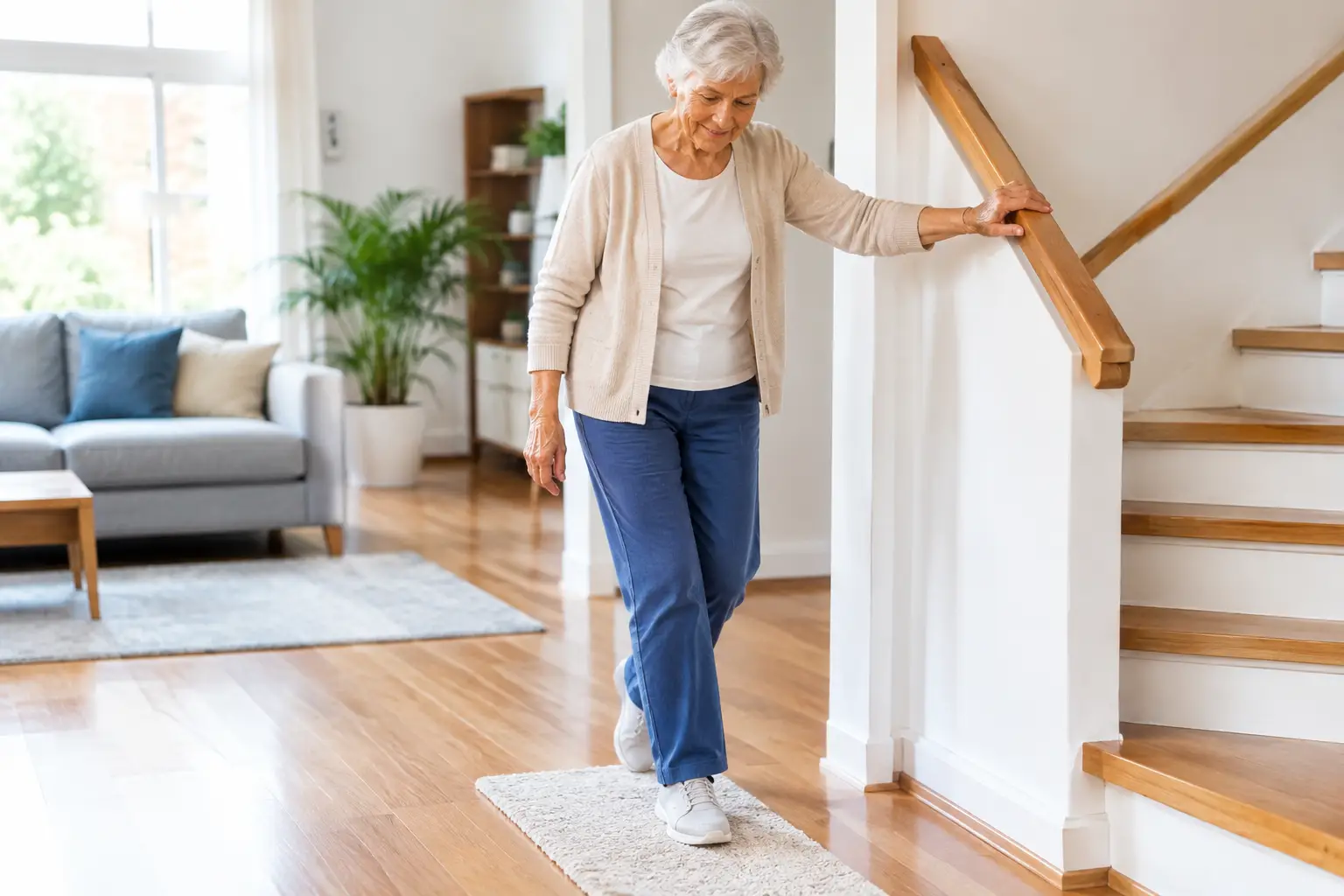
A fall can happen in seconds: reaching for something on a high shelf, getting up quickly at night, stepping over a child’s toy or walking on an uneven footpath. For older adults especially, a fall may lead to pain, loss of confidence and reduced independence. These fall prevention tips can help you and your family make everyday routines safer while recognising when a health check is needed.
Falls are not simply an inevitable part of getting older. Many have contributing factors that can be identified and managed, including reduced strength, poor balance, changes in vision, unsuitable footwear, medication side effects or hazards around the home. Small, practical changes can make a meaningful difference.
Fall prevention tips start with the home
Most falls occur in or around the home, where familiar surroundings can sometimes make hazards easier to overlook. Start by walking through each room with fresh eyes. Look for loose rugs, electrical cords crossing walkways, clutter on stairs, poor lighting and furniture that is difficult to move around.
Keep commonly used items within easy reach so there is less need to stretch, climb or stand on a chair. If you use a step stool, choose one with a handrail and a stable, non-slip base. Never use a chair, crate or unstable piece of furniture to reach a high cupboard.
Lighting deserves particular attention. Make sure hallways, entryways, stairs and bathrooms are well lit, and consider night lights between the bedroom and bathroom. Keep a lamp, glasses and a mobile within reach of the bed, particularly if you need to get up overnight.
Make the bathroom safer
Wet surfaces and confined spaces make bathrooms a common place for falls. A non-slip mat in and outside the shower, grab rails near the toilet and shower, and a shower chair where appropriate can provide extra security. It is also worth checking that towels, toiletries and medicines can be reached without bending, twisting or climbing.
If you rent, speak with your landlord or property manager before making permanent changes. An occupational therapist can offer tailored advice about modifications that suit your home, mobility and daily activities.
Choose footwear that supports you
Slippers that are loose, worn smooth underneath or easy to slip out of can increase the risk of a fall. Shoes should fit well, fasten securely and have non-slip soles. Avoid walking around in socks on polished timber, tiles or other slippery floors.
Supportive footwear is just as relevant outside the home. Uneven paths, wet leaves, kerbs and poorly lit car parks can all create risks. Take your time, use handrails where available and avoid carrying so much that you cannot see where you are stepping. If you use a walking stick, frame or other mobility aid, make sure it is the right height and in good condition.
Keep strength and balance part of your routine
Strong leg muscles and good balance help you recover if you trip or lose your footing. Regular movement can also support joint health, confidence and independence. The best activity is one you can do safely and continue over time.
Walking, gentle strength exercises, tai chi, supervised balance classes and physiotherapist-designed programs may all be helpful. The right option depends on your current fitness, medical conditions, pain levels and confidence. If you have recently fallen, feel unsteady or have a condition affecting movement, ask a GP or physiotherapist for guidance before starting a new exercise program.
It can be tempting to reduce activity after a fall, but avoiding movement completely can weaken muscles and make future falls more likely. A gradual, supported return to activity is often safer than trying to manage alone.
Review your health and medicines
Dizziness, faintness, blurred vision, numb feet, low blood pressure and sudden weakness can all affect balance. Some medicines may also cause drowsiness, light-headedness or changes in blood pressure, especially when several medicines are taken together.
Do not stop prescribed medicine without medical advice. Instead, bring an up-to-date list of all medicines, vitamins and supplements to your appointment and ask for a review. This is particularly useful after a hospital visit, a new diagnosis or a change in prescriptions.
A GP can also assess health issues that may contribute to falls, such as diabetes-related nerve changes, arthritis, heart conditions, Parkinson’s disease, osteoporosis, vitamin deficiencies or inner-ear problems. Depending on your needs, this may include checking blood pressure while sitting and standing, reviewing vision, arranging tests or coordinating support from allied health professionals.
Do not put off vision and hearing checks
Changes in eyesight can make it harder to judge steps, kerbs and changes in surface level. Keep your glasses prescription current and wear your glasses as advised. Take care with multifocal lenses when using stairs or walking outdoors, as the lower part of the lens may affect how clearly you see the ground.
Hearing also contributes to awareness of your surroundings. If you are finding it difficult to hear alarms, footsteps or conversation, a hearing assessment may be worthwhile. Good vision and hearing do not remove every risk, but they can help you respond earlier to hazards.
Plan for everyday situations that increase risk
Falls are more likely when people are rushing, tired, unwell or distracted. Give yourself extra time when getting out of bed, standing from a chair or leaving the car. Sit for a moment before standing if you have been lying down, then stand slowly and hold onto something stable if needed.
Stay hydrated, particularly during warmer Victorian weather or when you are unwell. Dehydration can contribute to dizziness and low blood pressure. Regular meals also matter, especially for people managing diabetes or taking medicines that affect blood sugar.
If urgency to use the toilet makes you rush, speak with your GP. Bladder symptoms are common and treatable, and managing them may reduce the need to hurry at night. Keeping a clear path to the bathroom and using a bedside light can also help.
What to do after a fall
After a fall, take a moment before trying to get up. If you are injured, have severe pain, cannot move normally or may have hit your head, seek urgent medical help. Call 000 if there are concerning symptoms such as chest pain, trouble breathing, weakness on one side, confusion, loss of consciousness or a suspected serious injury.
Even if you feel fine, it is sensible to arrange a medical review after an unexplained fall, repeated falls or a fall that has affected your confidence. Tell the clinician what happened: where you were, what you were doing, whether you felt dizzy, what shoes you wore and what medicines you take. These details can help identify patterns that are not obvious at first.
If you live alone or support an older relative, consider a simple plan for getting help. This may include carrying a mobile, checking in regularly with family or neighbours, or using a personal alarm if appropriate. The best approach depends on the person’s health, home environment and preference for independence.
When to book a fall risk assessment
A fall risk assessment is particularly worthwhile if you have fallen in the past year, feel unsteady when walking, use a mobility aid, have osteoporosis, take several regular medicines or are worried about managing safely at home. It can also be helpful after a hospital stay or a significant change in health.
At Parkmore Medical Centre, your GP can help assess possible causes, review medicines and coordinate care with physiotherapy, nursing and other services where needed. A personalised plan is often more useful than relying on general advice alone.
A safer home, supportive shoes and regular movement are valuable starting points, but confidence matters too. Raising concerns early can help you keep doing the everyday things that make life feel like your own.