
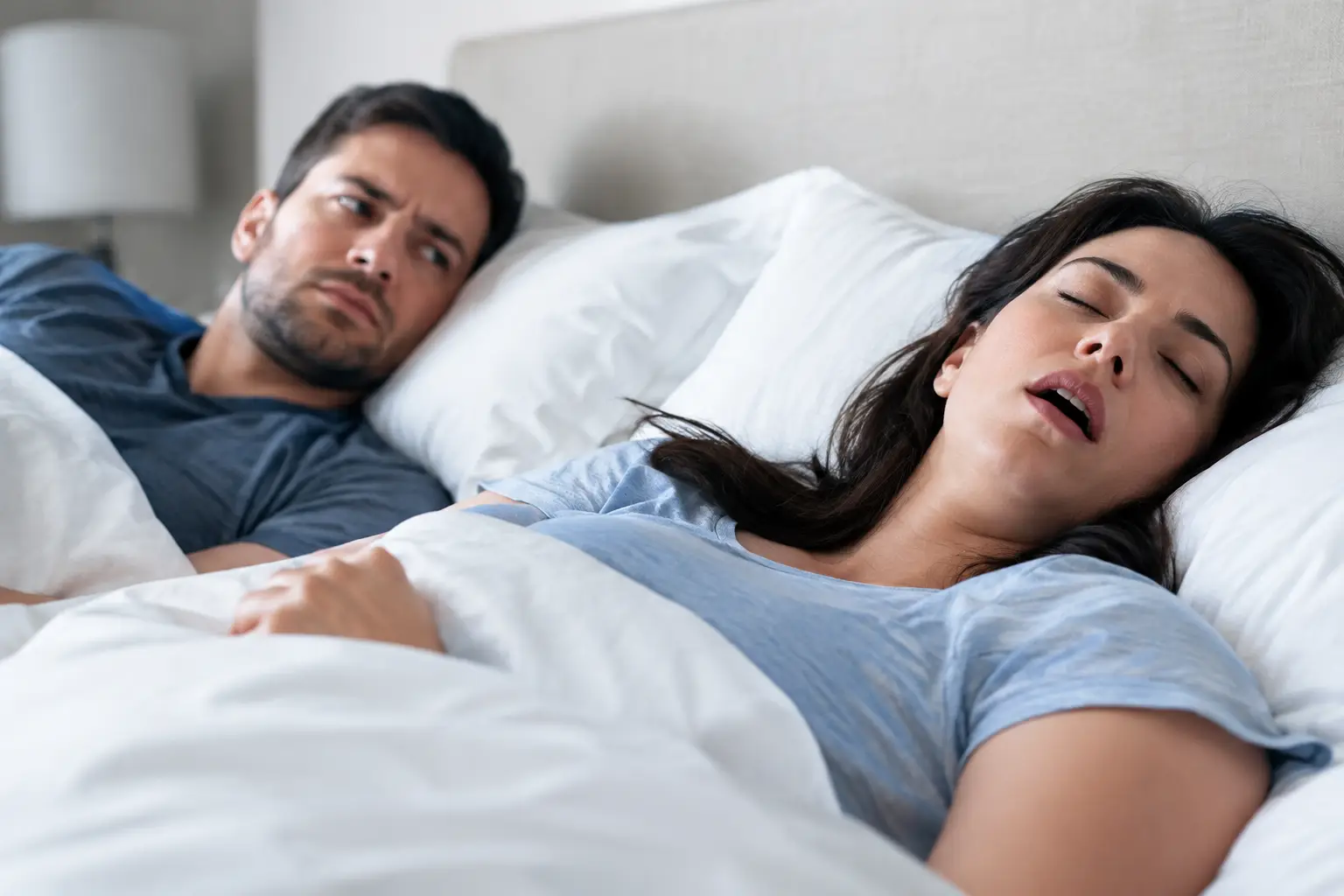
A partner may notice the first clue: loud snoring that suddenly stops, followed by a pause and a gasp. But common sleep apnoea signs are not always as obvious as this. Many people seek help because they are exhausted during the day, waking with headaches or struggling to concentrate, without realising disrupted breathing during sleep may be involved.
Sleep apnoea is a condition where breathing repeatedly stops or becomes too shallow while a person is asleep. These interruptions can reduce oxygen levels and repeatedly pull the brain out of deeper, restorative sleep. You may not fully wake up or remember it happening, yet the effects can carry into every part of the following day.
What are the common sleep apnoea signs?
The most common form is obstructive sleep apnoea, where the upper airway narrows or closes during sleep. The body responds by briefly rousing to reopen the airway, often many times a night. Snoring is common, but not everyone who snores has sleep apnoea, and not everyone with sleep apnoea snores loudly.
A reliable pattern is more meaningful than one isolated symptom. Signs can be noticed overnight, on waking, or during ordinary daytime activities.
Signs that happen during sleep
Someone else may be more likely to observe these signs, particularly if you share a room or bed. They can include loud, regular snoring; breathing pauses; choking, snorting or gasping sounds; restless sleep; frequent waking; and waking to use the toilet several times.
Children can present differently. Rather than seeming sleepy, they may sleep restlessly, sweat heavily at night, snore, breathe through their mouth or show daytime irritability and difficulty concentrating. Persistent snoring in a child is worth discussing with a GP rather than assuming they will grow out of it.
Signs you may notice in the morning
Waking unrefreshed after what should have been enough sleep is a common concern. Some people wake with a dry mouth, sore throat or dull morning headache. Others feel as though they have barely slept, even when they have spent eight or nine hours in bed.
These symptoms can have other causes, including insomnia, stress, medication effects or nasal congestion. However, when they occur alongside snoring, witnessed breathing changes or daytime sleepiness, sleep apnoea becomes more likely and should be assessed.
Daytime symptoms that should not be dismissed
Excessive daytime sleepiness is more than feeling a little tired after a busy week. You might nod off while watching television, reading, sitting in a meeting or as a passenger in a car. Some people experience a dangerous loss of alertness while driving, particularly on long or monotonous trips.
Other daytime signs include poor concentration, forgetfulness, low mood, irritability and reduced motivation. Sleep disruption can also affect sexual function and make it harder to manage appetite, weight and exercise. These issues are common and treatable, so there is no need to put up with them in silence.
Who is more likely to develop sleep apnoea?
Sleep apnoea can affect people of different ages, body sizes and genders. It is more common with increasing age and can run in families. Weight gain may increase the likelihood of obstructive sleep apnoea because extra tissue around the neck and airway can contribute to narrowing during sleep. That said, a person does not need to be overweight to have the condition.
Other factors can include a naturally narrow airway, enlarged tonsils, chronic nasal blockage, smoking, alcohol close to bedtime and sedating medicines. Pregnancy, menopause and certain medical conditions can also change risk. In some people, sleep apnoea occurs because the brain does not consistently signal breathing during sleep. This less common type, called central sleep apnoea, needs medical assessment as well.
It is helpful to avoid self-diagnosis based on appearance or snoring alone. A GP can consider your symptoms, health history, medicines and risk factors together.
Why early assessment matters
Untreated sleep apnoea can affect more than energy levels. Repeated drops in oxygen and overnight stress on the body are associated with high blood pressure, heart disease, stroke, type 2 diabetes and mood concerns. It can also make existing health conditions harder to manage.
There are practical consequences too. Persistent fatigue can affect work, study, relationships and safe driving. For parents, shift workers and people balancing busy family schedules, poor sleep is often normalised for too long. The key question is not whether life is busy, but whether sleep leaves you able to function safely and feel restored.
If you are becoming sleepy behind the wheel, do not drive when drowsy. Pull over safely, arrange another way to travel if possible, and make a prompt appointment to discuss the cause. Sudden severe breathlessness, chest pain, fainting or new neurological symptoms require urgent medical care rather than waiting for a routine sleep assessment.
What happens when you see a GP?
A GP appointment is a sensible first step if you or someone close to you has noticed possible sleep apnoea signs. Bringing useful details can make the conversation easier: how often symptoms occur, whether anyone has seen pauses in your breathing, how refreshed you feel on waking, and whether sleepiness is affecting driving or daily life.
Your GP may ask about your sleep routine, alcohol intake, medicines, nasal symptoms and other health conditions. They may check your blood pressure, weight and airway, and consider whether another condition could be contributing to tiredness. Depending on the situation, you may be referred for a sleep study.
A sleep study records information such as breathing, oxygen levels, heart rate and sleep patterns. Some studies are completed at home, while others are performed in a sleep clinic. The best option depends on your symptoms and medical history. The results help guide treatment rather than relying on guesswork.
Treatment is not one-size-fits-all
Treatment depends on the type and severity of sleep apnoea, as well as your preferences and overall health. For many people with moderate to severe obstructive sleep apnoea, continuous positive airway pressure, often called CPAP, is very effective. It uses gentle air pressure through a mask to help keep the airway open while sleeping.
Other options may include a fitted oral appliance provided through an appropriately qualified dental professional, treatment for nasal obstruction, positional strategies, or specialist review. Weight management can improve symptoms for some people, but it is not a quick fix and should be approached with realistic, supported goals. Reducing alcohol near bedtime and reviewing sedating medicines with a clinician may also help in selected cases.
CPAP can take time to get used to, and an oral appliance is not suitable for everyone. Comfort, cost, symptom severity and other health conditions all matter. A good treatment plan is one you can use consistently and review when your needs change.
When to make an appointment
Book a GP appointment if loud snoring is paired with choking or gasping, someone has noticed breathing pauses, or tiredness is affecting your concentration, mood, work or driving. It is also worth speaking with a GP when a child snores regularly or has restless sleep and behavioural changes during the day.
At Parkmore Medical Centre, your GP can help assess ongoing sleep concerns, coordinate appropriate testing or referral, and support related health needs such as blood pressure, weight or chronic condition management. Seeking advice is not overreacting. Better sleep can be a meaningful step towards feeling safer, clearer and more like yourself each day.