A skin check is not simply a quick look at one mole. It is a focused medical consultation that considers your skin cancer risk, examines spots that concern you, and helps identify changes that may need monitoring, testing or treatment. Knowing what happens during a skin check can make it easier to book with confidence and arrive prepared.
Australia has one of the highest rates of skin cancer in the world, and changes can occur in places you may not routinely see, such as the scalp, back, soles of the feet or between the toes. A regular check provides an opportunity to raise concerns early, particularly if you have noticed a mole, freckle or patch of skin changing over time.
What happens during a skin check?
Your appointment generally begins with a conversation. Your GP will ask whether you have noticed a new or changing spot, a sore that will not heal, persistent itchiness, bleeding, crusting or a mole that looks different from the others. It helps to mention when you first noticed the change and whether it has altered in size, shape, colour or sensation.
Your doctor may also ask about your personal and family history. Previous skin cancers, frequent sunburns, substantial sun exposure through work or sport, use of tanning beds, fair skin, many moles and a family history of melanoma can all affect your level of risk. Some medicines and health conditions that suppress the immune system may also be relevant.
This discussion is not a test you need to study for. It simply gives your doctor useful context and helps determine whether a specific spot or a broader examination is appropriate.
The skin examination
Depending on the reason for your visit and your individual risk, your doctor may examine a particular lesion or perform a more comprehensive skin check. You may be asked to undress to your underwear and use a gown or covering while different areas are examined. Your comfort and privacy should be respected throughout, and you can ask questions or request a chaperone if you would prefer one.
The examination may include areas that are often missed at home, including your scalp, ears, neck, back, chest, arms, legs, feet and the skin between your toes. Your doctor may also examine nails, as some concerning pigment changes can occur underneath them. If there is an area you do not want examined, let your doctor know. Care can be tailored to your circumstances while still addressing the reason you attended.
A full skin check is usually visual and painless. Most appointments do not involve needles, scans or treatment on the day, unless a spot needs further assessment or removal.
Looking closely with dermoscopy
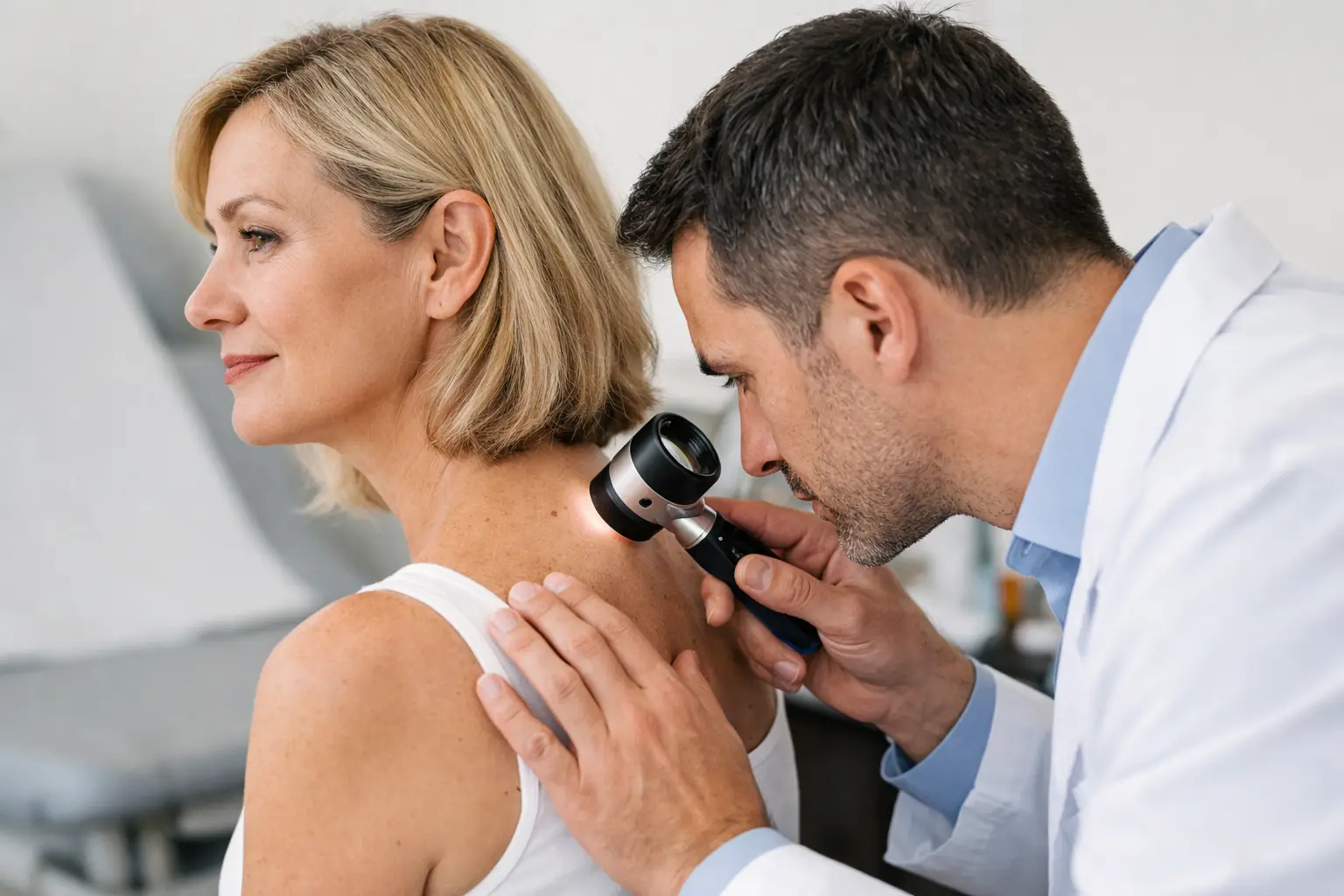
If your doctor identifies a spot that needs a closer look, they may use a dermatoscope. This is a small handheld device with light and magnification that allows the doctor to see patterns and structures beneath the surface of the skin.
Dermoscopy can provide more detail than the naked eye alone and may help distinguish a harmless lesion from one requiring further investigation. It does not hurt and does not break the skin. A doctor may examine several moles this way, especially if they look different from your other spots.
What your doctor is assessing
Doctors consider more than whether a mole is dark or raised. They look for features that may warrant review, including asymmetry, an uneven border, varied colour, an increase in diameter or a lesion that is evolving. A spot that stands out as different from your usual moles can also be significant, even if it does not match every familiar warning sign.
Not every skin cancer looks like a classic mole. Basal cell carcinomas and squamous cell carcinomas may appear as a pearly bump, scaly patch, sore, red area or lesion that repeatedly bleeds and does not heal. Melanoma can develop in an existing mole or arise as a new mark on previously normal skin.
Many spots found during skin checks are benign. These can include sunspots, seborrhoeic keratoses, harmless moles, skin tags and cherry angiomas. Your GP can explain what a lesion is likely to be and whether it needs any treatment. Reassurance is a valuable outcome of a skin check, but it should be based on an appropriate clinical examination rather than guesswork.
If a spot needs further investigation
If your doctor is concerned about a lesion, the next step will depend on its appearance, your history and the facilities available. Sometimes they may recommend monitoring it over a defined period, particularly where the features are not clearly concerning but a change needs to be checked.
In other cases, your GP may recommend a biopsy or removal. A biopsy involves taking a small sample of skin, or sometimes removing the whole lesion, so it can be examined by a pathology laboratory. The area is usually numbed with local anaesthetic first. You may need a small dressing afterwards and will be given practical aftercare advice.
Some lesions are best managed by a GP with skin procedure experience, while others need referral to a dermatologist or specialist surgeon. A referral does not necessarily mean the lesion is cancerous. It means your care is being directed to the most suitable clinician for diagnosis or treatment.
Your doctor should explain why they are recommending the next step, what it involves, expected costs where relevant, and when you can expect results. Make sure you know how results will be communicated and whether you need to book a follow-up appointment.
How to prepare for your appointment
You do not need to do much to prepare, but a few simple steps can make the consultation more useful. Avoid wearing heavy make-up over a spot you want checked, and remove nail polish if you have noticed a change around or beneath a nail. If a lesion has changed over time, photos on your mobile can sometimes help show its progression.
Write down any questions, particularly if you have several spots you want reviewed. Tell your doctor about previous skin cancers, past biopsies and any family history you are aware of. If you have been referred by another clinician, bring any relevant reports or photographs if available.
It is also sensible to attend when you have enough time for a proper assessment. A skin check may be combined with another concern in some circumstances, but a dedicated appointment is often best if you have multiple lesions, a strong family history or a spot that has recently changed.
How often should you have a skin check?
There is no single schedule that suits everyone. Your ideal frequency depends on your individual risk, previous skin cancer history, number of moles, family history, sun exposure and any new symptoms. Your GP can advise whether you should return annually, more often, or simply arrange a review whenever you notice a concerning change.
Between appointments, be familiar with your own skin. A monthly check in good light can help you notice new or evolving spots, including on your back with the help of a partner or family member. Sun protection remains important year-round: use shade, protective clothing, a broad-brimmed hat, sunglasses and SPF 50+ sunscreen when spending time outdoors.
If you notice a new spot that is changing, bleeding, painful, itchy or not healing, do not wait for your next routine check. Booking an appointment promptly gives your GP the best opportunity to assess it and guide you towards the right next step. For patients in Keysborough and nearby south-eastern Melbourne suburbs, Parkmore Medical Centre can provide practical, patient-centred support for skin concerns and ongoing preventive care.