
A spot on your skin can sit there for months without causing pain, itching or any real fuss. That is part of the problem. Skin cancers often develop quietly, which is why many people ask when should you get skin checks only after they notice something has changed.
The better time to ask is before that happens. A skin check is not only for people with a suspicious mole. It can also be a sensible preventive step, especially in Australia, where sun exposure is part of daily life and skin cancer is common.
When should you get skin checks?
For many adults, a skin check is worth considering if you have never had one before, particularly if you spend a lot of time outdoors, have fair skin, a personal or family history of skin cancer, or have noticed any new or changing spots. There is no single timetable that suits everyone. How often you should be checked depends on your risk level, age, medical history and what your doctor finds on examination.
Some people may only need occasional checks. Others are advised to have them regularly, such as every 6 to 12 months. If you have had skin cancer before, your doctor may recommend more frequent review.
What matters most is not waiting until a spot becomes painful or obviously serious. Early skin cancers can look subtle. A small change that seems minor to you may still be worth assessing.
Why timing matters with skin checks
Skin checks are about finding changes early, when treatment is often simpler and outcomes are generally better. Not every mole or patch is dangerous, and many harmless spots appear with age. Still, it can be hard to tell the difference on your own.
A professional skin check gives you a clearer picture of what is normal for your skin and what is not. It can also help identify patterns, such as sun damage or clusters of atypical moles, that may increase your need for monitoring over time.
There is also a practical benefit. When people put off checks, they often do so because they are busy, unsure if a spot matters, or hoping it will settle. That delay can mean a lesion has more time to grow. Booking an appointment when you first have concerns is usually the simpler path.
Who should think about regular skin checks?
Some people have a higher risk of skin cancer and should be more proactive. That includes people with fair skin, light eyes, freckles, or hair that burns easily in the sun. It also includes those who have worked outdoors, had repeated sunburns, used solariums in the past, or have a strong family history of melanoma or other skin cancers.
Your age can also play a role. Skin cancer risk generally increases over time, especially after years of cumulative sun exposure. That said, younger adults are not immune. Melanoma can occur in younger people too, particularly if there are genetic risk factors or significant past sun exposure.
If you take medicines that suppress the immune system, or you have a condition that affects immunity, regular checks may be even more important. Your doctor can help work out a schedule that makes sense for you rather than applying a blanket rule.
Signs you should book a skin check sooner
You do not need to wait for your next routine appointment if something has changed. Certain signs deserve attention sooner rather than later.
A mole or spot that changes in size, shape or colour should be checked. The same goes for a lesion with an irregular border, one that looks different from your other spots, or one that bleeds, crusts, does not heal, or keeps returning after seeming to settle.
Itching can sometimes be relevant, but the absence of symptoms does not mean a spot is safe. Some skin cancers are completely painless. A new lesion that appears in adulthood, especially if it keeps evolving, is another reason to book in.
If you are unsure, it is reasonable to have it assessed. Most concerns do not turn out to be serious, but reassurance from a GP is far more useful than guessing at home.
How often should you get skin checks?
This is where the answer becomes more individual. Someone with low risk and no concerning lesions may only need checks occasionally, or as advised by their GP after a baseline skin assessment. Someone with multiple risk factors may benefit from a regular schedule.
As a general guide, people at higher risk are often advised to have skin checks every 6 to 12 months. For lower-risk patients, the interval may be longer. If you have previously had melanoma or non-melanoma skin cancer, follow-up may be more frequent depending on the type, location and treatment history.
A good starting point is to book a skin check if you have never had one and let your doctor advise what happens next. That first assessment often helps determine whether routine surveillance is needed and how often.
What happens during a skin check?
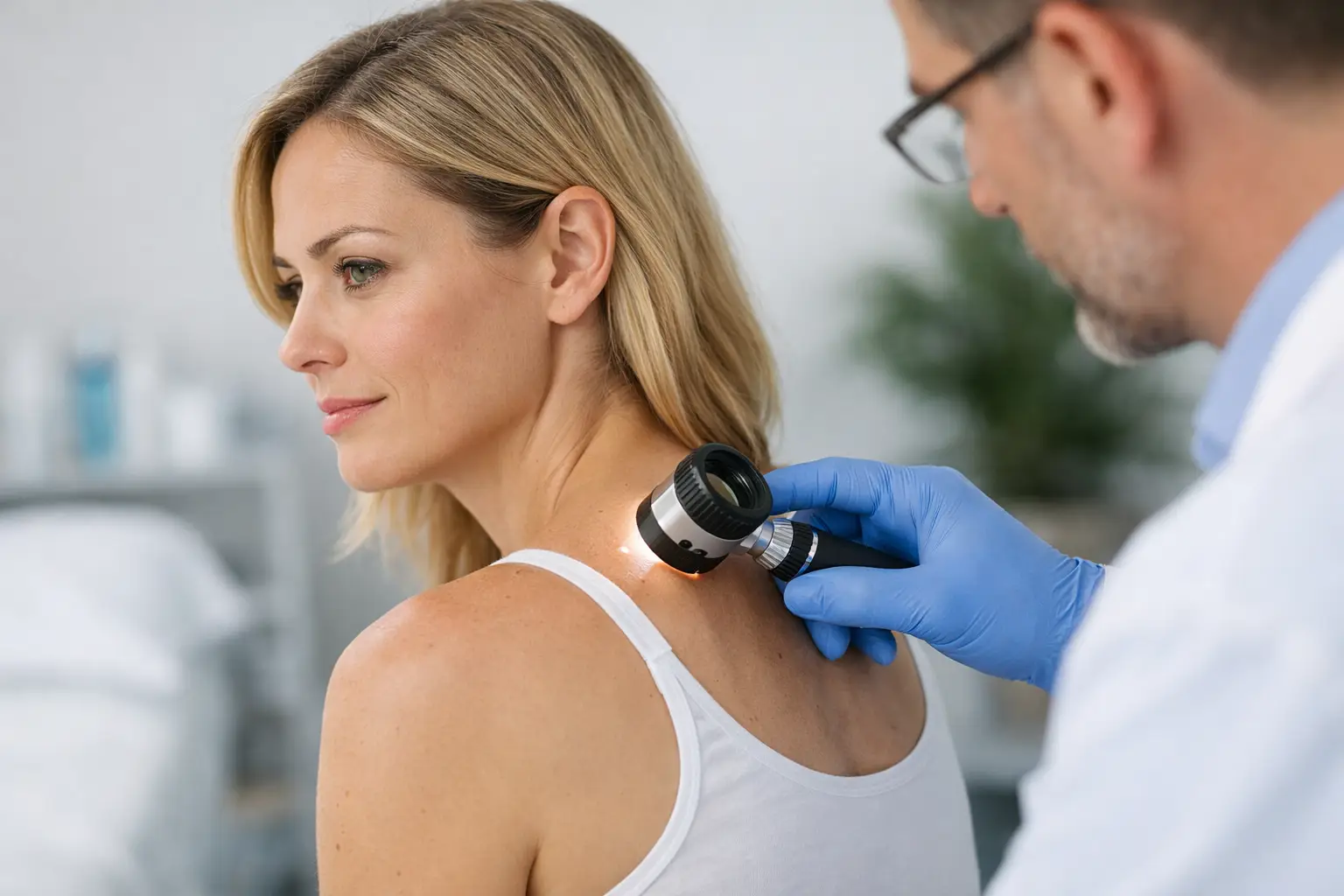
A skin check is usually straightforward. Your doctor will ask about your history, including past sun exposure, family history, previous skin cancers and any spots you are worried about. They will then examine your skin, often using a dermatoscope to look at lesions more closely.
Depending on the appointment and your concerns, the check may focus on a particular area or involve a more thorough full-body examination. If a spot looks suspicious, your doctor will explain the next steps. That might mean monitoring it, photographing it for comparison, arranging removal, or referring you for further management.
For many patients, the biggest barrier is uncertainty about what the appointment will involve. In reality, it is usually a simple, practical part of preventive healthcare.
Skin self-checks still matter
Professional checks are important, but so is keeping an eye on your own skin between appointments. You are the person most likely to notice when something changes.
A monthly self-check can be helpful, especially if you have many moles or a history of sun damage. Look at your arms, legs, chest, back, scalp, soles of your feet and nails. Use a mirror for hard-to-see areas, or ask a family member to help.
The goal is not to diagnose yourself. It is to notice change. If something looks new, unusual or different from the rest, that is enough reason to arrange a medical review.
Skin checks for families and older adults
In family practice, skin concerns often come up in different ways. Parents may notice a spot on themselves only after bringing in a child for another appointment. Working adults may delay checks because they are juggling work, school runs and caring responsibilities. Older adults may assume a rough patch is just part of ageing.
That is why convenience matters. Preventive care is easier to keep up with when it fits into real life. A local GP who understands your history can also make ongoing monitoring more consistent, especially if you have other health conditions or need follow-up over time.
For older patients in particular, routine skin reviews can be a sensible part of staying on top of overall health. Many non-melanoma skin cancers appear gradually and may be overlooked until they start causing visible damage.
When to stop watching and start booking
There is a difference between being sensible and becoming anxious about every freckle. Most skin spots are harmless. At the same time, if you have been wondering about one particular lesion for weeks or months, that is usually your cue to have it checked.
You do not need to wait until a spot looks dramatic. You also do not need to know whether it fits a textbook definition of skin cancer. If it is changing, not healing, or simply does not seem right, book an appointment.
For patients in Keysborough and surrounding suburbs, having skin checks available through a trusted local medical clinic can make that step easier. Whether you need reassurance, a first-time baseline check or ongoing monitoring, getting assessed early is a practical way to look after your health.
If you are asking when should you get skin checks, the answer is often sooner than people think – ideally before a small concern turns into a bigger one.