

Spirometry (Lung function testing) in Keysborough
Diagnostic respiratory assessments delivered in partnership with SleepScope at Parkmore Specialist Centre.
Whether you are investigating chronic shortness of breath, monitoring an existing condition, or seeking a formal diagnosis for asthma or COPD, our on-site spirometry clinic offers hospital-grade diagnostic accuracy within a comfortable primary care setting.
Indications
A spirometry test may be recommended by your doctor if you’re experiencing any of the following symptoms or conditions:
- Shortness of Breath: Difficulty catching your breath.
- Asthma: Frequent wheezing or a persistent cough.
- Chronic Obstructive Pulmonary Disease (COPD): A condition that makes it hard to breathe, often accompanied by chest tightness and coughing.
- Lung Disease: Conditions that limit how well your lungs can function.
- Pre-Surgery Assessment: To check your lung function before surgery.
- Chronic Lung Issues: If you’re managing ongoing lung-related health problems or disabilities.
What is a Spirometry Test?
A spirometry test measures how well your lungs are working by testing how much air you can inhale, how much you can exhale, and how fast you can blow the air out. This test helps diagnose conditions like asthma and COPD, as well as monitor how well treatments are working.
What Can I Expect During the Test?
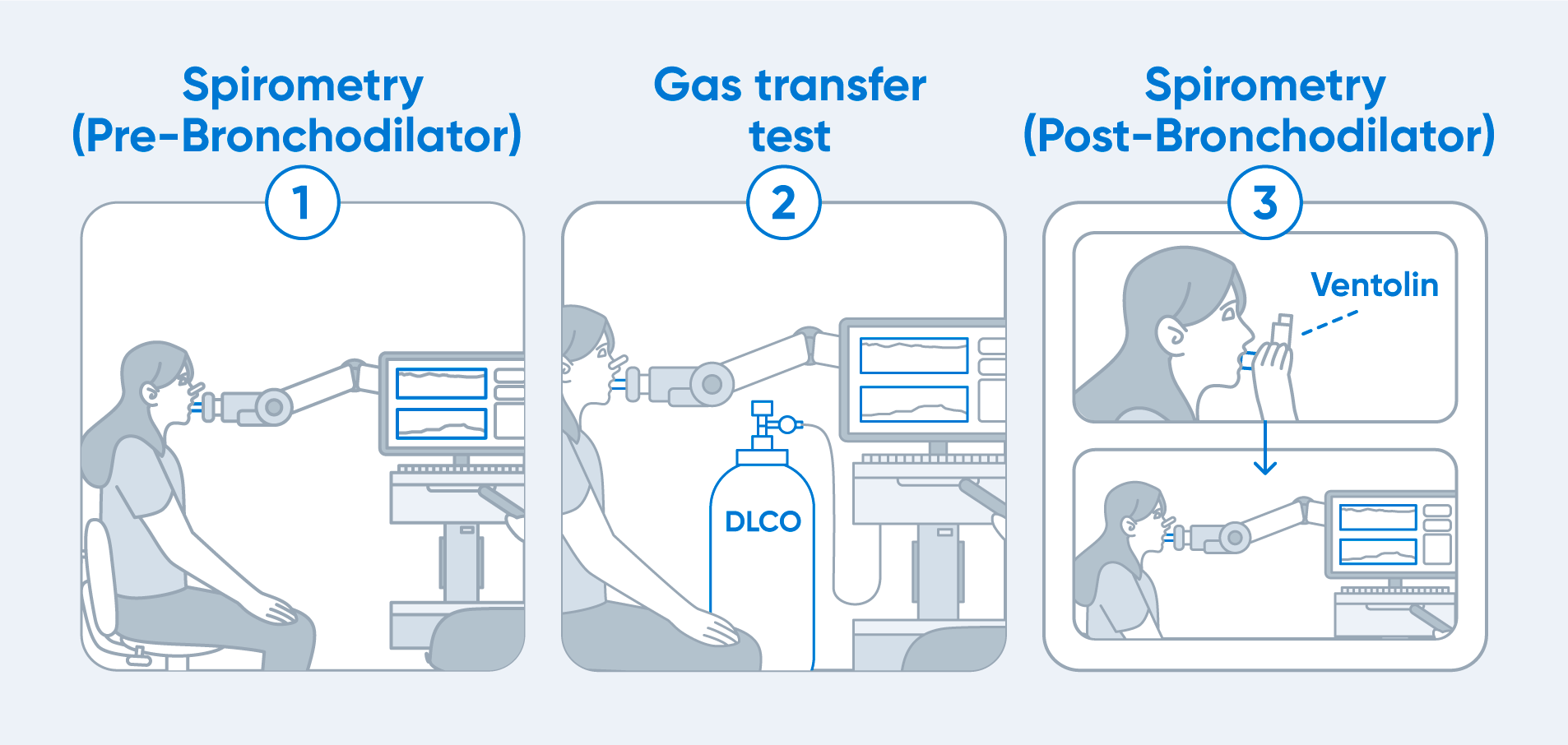
- Spirometry (Pre-Bronchodilator):
- You will start by breathing normally into the mouthpiece.
- Then, you’ll take a deep breath in and exhale as hard and fast as possible.
- This will be repeated at least three times to ensure accurate readings.
- The pre-bronchodilator test measures how your lungs perform without any medication to open your airways.
- Spirometry (Post-Bronchodilator):
- If your doctor’s referral includes a post-bronchodilator test, you’ll be given a bronchodilator medication, like Ventolin, which helps relax and open up your airways.
- After taking the medication, you’ll wait for about 4 minutes.
- You will then repeat the same breathing exercises, and the results will show how well your lungs respond to the bronchodilator.
Depending on your doctor’s referral, you might do just the pre-bronchodilator test, just the post-bronchodilator test, or both. The test usually takes 20-30 minutes to complete.
What Are the Risks of the Test?
The spirometry test is very safe. You might feel slightly light-headed or short of breath for a few moments after blowing into the mouthpiece, but this feeling goes away quickly. Some people with asthma may experience a temporary tightening of their airways during the test, but a healthcare professional will be there to assist if needed.
Preparation
(This test will take up to 30 minutes)
To make sure your spirometry test results are accurate, follow these guidelines:
- Medications: Some medications should be stopped before the test. Please adhere to the following:
- Stop 24 hours prior to test: Spiriva, Incruse, Seebri, Spiolto, Brimica, Breo, Onbrez, Anoro, Trelegy, Ultibro.
- Stop 12 hours prior to test: Serevent, Seretide, Oxis, Symbicort, Flutiform, Foradile or Bretaris.
- Stop 4 hours prior to test: Ventolin, Respolin, Atrovent, Bricanyl, Asmol, Ipratrin, Airomir.
- Wear comfortable, loose clothing that doesn’t restrict your breathing.
- Avoid smoking for at least 6 hours before your test.
- Refrain from drinking alcohol for at least 4 hours before the test.
- Don’t eat a large meal within 2 hours of your test, as this can make it harder to breathe deeply.
- Avoid intense exercise for at least 1 hour before your appointment.
- Let us know if you’ve recently had:
- Eye, chest, brain or abdominal surgery (within the last 4 weeks).
- Chest pain, a recent heart attack, or an unstable heart condition.
- Active tuberculosis (TB) or a respiratory infection like a cold or the flu.
- A bulging blood vessel (aneurysm) in your chest, abdomen, or brain.
- Sinus or middle ear surgery or infection (within 1 week).
Following these steps helps ensure that your test results are reliable and give your doctor the information they need to best assess your lung health.
In Partnership with SleepScope
Parkmore Medical Centre partners directly with SleepScope, a premier Australian cardiopulmonary diagnostic provider.
Calibrated Digital Spirometry: Testing is conducted using calibrated, high-precision equipment adhering strictly to TSANZ (Thoracic Society of Australia and New Zealand) and ATS/ERS guidelines.
Respiratory Physician Review: Traces and flow-volume loops are reviewed and reported by accredited respiratory and sleep physicians.
Integrated Care: Results are electronically sent straight to your GP, allowing immediate implementation or adjustment of your respiratory management plan.
Frequently Asked Questions
Do I need a GP referral for spirometry?
Yes. Spirometry at Parkmore Specialist Centre requires a referral from any general practitioners to ensure clinical indication and eligibility for Medicare rebates.
Is the test covered by Medicare?
When clinically indicated and requested by a GP, diagnostic spirometry (including pre- and post-bronchodilator assessment) attracts a Medicare rebate under MBS item numbers. Please check with reception regarding current billing policies.
Is spirometry safe?
Spirometry is a routine, non-invasive test. Because it requires forceful exhalation, it temporarily increases pressure in your chest, abdomen, and eyes. Please inform your GP if you have had recent eye surgery, a heart attack, an aneurysm, or recent thoracic/abdominal surgery.
Book Your Lung Health Check
Take control of your respiratory health with accredited diagnostics close to home.
Location: Parkmore Specialist Centre, L1 323 Cheltenham Road, Keysborough VIC 3173
- Referrals from all GPs are welcome.

