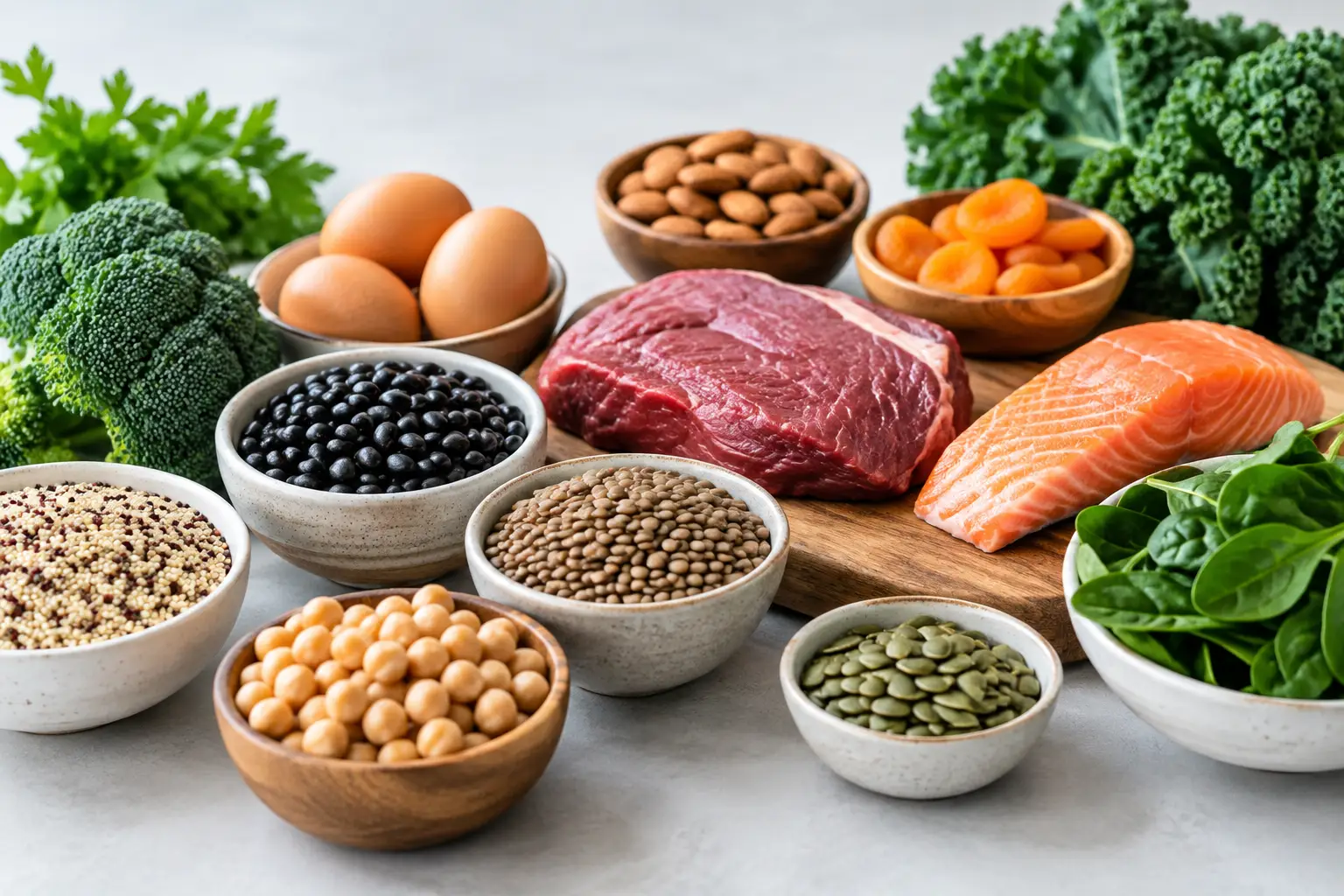
Feeling tired after a full night’s sleep, becoming breathless more easily than usual, or struggling to concentrate can have many causes. Low iron is one possibility, and choosing iron rich foods is a practical way to support your intake. Food is not always enough to correct iron deficiency, but regular meals built around good iron sources can play an important part in maintaining healthy iron levels.
Iron helps your body make haemoglobin, the protein in red blood cells that carries oxygen around the body. Your iron needs can change across life stages, including during pregnancy, heavy menstrual periods, adolescence, regular endurance training, and later life. A balanced approach matters more than trying to add one ‘superfood’ to your diet.
Iron rich foods to include more often
Dietary iron comes in two forms: haem iron and non-haem iron. Haem iron is found in animal foods and is generally absorbed more easily. Non-haem iron comes from plant foods and fortified products. Both are valuable, particularly when meals are planned with absorption in mind.
1. Lean red meat
Beef, lamb and kangaroo provide haem iron, as well as protein, zinc and vitamin B12. A modest serve of lean red meat a few times each week may suit many people. Choose lean cuts, vary your protein sources, and consider your individual health needs, especially if you have heart disease, high cholesterol or other dietary advice from your GP.
2. Chicken, turkey and seafood
Chicken and turkey contain iron, particularly darker meat, although generally less than red meat. Seafood can also contribute. Options such as sardines, tinned tuna, mussels and oysters can add variety to family meals while providing protein and other nutrients.
If you are pregnant, planning a pregnancy, or have a medical condition that affects your immune system, ask your doctor about seafood choices and food safety. Freshness, safe storage and thorough cooking are just as important as the nutrient content.
3. Eggs
Eggs are an affordable, versatile source of iron and protein. They work well at breakfast, in a lunch salad or as part of an easy evening meal. Pairing eggs with vegetables such as capsicum, tomato or spinach can make a satisfying meal without much preparation.
4. Lentils, beans and chickpeas
Lentils, kidney beans, cannellini beans and chickpeas are useful plant-based iron sources. They are also high in fibre, which supports gut health and can help you feel full for longer. Add them to soups, curries, salads, pasta sauces or wraps.
For people following vegetarian or vegan diets, legumes are often a regular foundation for meeting iron needs. Because plant iron is less readily absorbed, the way you combine foods becomes particularly helpful.
5. Tofu, tempeh and soy foods
Tofu and tempeh can provide iron, protein and a convenient meat-free option for stir-fries, curries and grain bowls. Firm tofu holds its shape well in cooking, while silken tofu can be blended into soups or sauces. Look for products that fit your overall dietary needs, including any allergy or intolerance requirements.
6. Dark green leafy vegetables
Spinach, silverbeet, kale and Asian greens contain non-haem iron, along with folate and other nutrients. While leafy greens are worthwhile, they should not be relied on as the only iron source if your levels are low. Use them alongside legumes, wholegrains, eggs, meat or fortified foods to build more complete meals.
7. Fortified breakfast cereals
Some breakfast cereals are fortified with iron and can make a meaningful contribution, especially for children, teenagers and people with limited appetites. Check the nutrition information panel, as products vary considerably in their iron, fibre and added sugar content.
Serving a fortified cereal with fruit such as kiwi fruit, strawberries or orange segments is an easy way to include vitamin C at breakfast.
8. Wholegrains and iron-fortified breads
Wholegrain bread, oats, quinoa and some grain-based products contain non-haem iron. They are not a substitute for medical treatment when iron deficiency is confirmed, but they can contribute steadily across the day. A bowl of porridge topped with fruit and seeds, or a wholegrain sandwich with chicken and salad, are practical examples.
9. Nuts and seeds
Pumpkin seeds, sesame seeds, cashews and tahini contain iron and can add texture to meals. Sprinkle seeds over yoghurt, salads or roasted vegetables, or spread tahini in a wrap. Keep portions realistic, as nuts and seeds are energy-dense, and take care with whole nuts for young children because of choking risk.
10. Dried fruit
Apricots, prunes and raisins provide small amounts of iron and can be a convenient snack. They also contain natural sugars and can stick to teeth, so they are best enjoyed in moderate portions and as part of a varied diet. Combining dried fruit with nuts or yoghurt can make a more balanced snack.
11. Iron-rich meal combinations
Often, the meal matters more than a single ingredient. A beef and vegetable stir-fry with capsicum, lentil bolognese with tomato-based sauce, or tofu and broccoli curry with a squeeze of lemon all combine iron-containing foods with vitamin C-rich ingredients.
This is particularly useful for families managing busy weekdays. Batch-cooking a bean chilli, making extra roast vegetables, or keeping tinned fish and legumes in the pantry can make balanced choices easier when time is short.
12. Foods rich in vitamin C
Vitamin C does not contain iron, but it can help your body absorb non-haem iron from plant foods. Citrus fruit, berries, kiwi fruit, tomatoes, capsicum, broccoli and leafy greens are all helpful additions. Try adding a piece of fruit to breakfast, capsicum to a sandwich, or tomato and lemon to a legume-based meal.
How to help your body absorb iron
A few small timing changes can make a difference. Tea and coffee contain compounds that can reduce iron absorption when consumed with a meal. You do not need to give them up, but it may help to enjoy them between meals rather than with your main iron-rich meal, particularly if you have been advised that your iron is low.
Calcium can also affect iron absorption for some people when taken at the same time as an iron supplement. Your doctor or pharmacist can advise on timing if you are taking supplements. Do not stop dairy foods or calcium supplements without professional advice, as calcium remains important for bone health.
Cooking in a cast-iron pan may add a small amount of iron to food, particularly acidic dishes such as tomato sauces. It can be a useful kitchen option, but it is not a reliable treatment for iron deficiency.
When food may not be enough
Low iron can occur because your diet does not provide enough iron, but it can also be linked with heavy periods, pregnancy, blood loss from the digestive tract, frequent blood donation, coeliac disease, inflammatory bowel conditions, or difficulty absorbing nutrients. For this reason, persistent symptoms should not be managed with diet alone.
Common symptoms can include tiredness, reduced exercise tolerance, headaches, dizziness, pale skin, restless legs or difficulty concentrating. These symptoms are not specific to iron deficiency, so a blood test is the best way to understand what is happening. Some people can have low iron stores before they develop anaemia.
Iron supplements are not suitable for everyone and can cause side effects such as nausea, constipation or stomach discomfort. Taking iron when you do not need it can also be harmful. Your GP can arrange appropriate testing, look for possible causes, and discuss whether dietary changes, oral iron, or another treatment such as an iron infusion may be appropriate.
At Parkmore Medical Centre, your GP can help you interpret blood results in the context of your symptoms, health history and diet. This is especially worthwhile if you have heavy menstrual bleeding, are pregnant, follow a restrictive diet, have ongoing bowel symptoms, or have previously needed iron treatment.
A nutritious meal is a positive place to start, but ongoing fatigue deserves proper attention. If you are concerned about your iron levels or symptoms are affecting daily life, booking a GP appointment can provide clear answers and a plan that suits you.