A changing mole is not the only reason to book. Skin cancers can develop in places you rarely see clearly yourself, including the scalp, back, behind the ears and soles of the feet. Knowing how to prepare for a skin check can help your GP examine your skin thoroughly, focus on any areas that concern you and make the appointment feel more straightforward.
A skin check is a practical preventive health appointment. It is a chance to discuss spots that are new, changing, itchy, bleeding or simply worrying you, as well as your personal sun exposure and skin cancer history. You do not need to wait until you are certain something is wrong.
Before your skin check appointment
The most useful preparation is to notice what has changed. In the week or two before your appointment, take a little time to look over your skin in good light. A mirror can help with hard-to-see areas, and a partner, family member or trusted friend may be able to check your back or scalp if appropriate.
Make a note of any spot that has changed in size, shape, colour or texture. Also note lesions that bleed, crust, do not heal, feel tender or itch repeatedly. If you have noticed a spot at different times, photographs on your mobile can be helpful for showing a change, particularly if the spot looks different on the day of the consultation.
Try not to rely on a photo alone to decide whether something is harmless. Images can be useful context, but an in-person assessment allows your GP to inspect the area properly and consider your overall skin health.
Bring your relevant health information
You do not need to prepare a detailed medical file, but a few key details can guide the consultation. Be ready to discuss any previous skin cancers, biopsies or treatments, as well as a family history of melanoma or other skin cancers. Let your GP know if you have had many severe sunburns, used solariums in the past, work outdoors or take medicines that affect your immune system.
If you have received skin treatment elsewhere, bring any reports you have available or tell the clinic where and when it occurred. It is also useful to have an up-to-date list of your regular medicines, vitamins and supplements. Some medicines can affect bleeding or healing if a procedure is later recommended.
What to wear and avoid on the day
Choose comfortable clothing that is easy to remove or move aside if a broader examination is needed. A skin check may involve looking at more than the area you first noticed, because sun damage and suspicious lesions can occur anywhere. Your GP will explain what they need to examine, protect your privacy and seek your consent throughout the appointment.
Where possible, arrive without heavy make-up, fake tan, nail polish or thick skin products that could cover a lesion or make its colour harder to assess. This is especially relevant if you are concerned about an area on your face, neck, chest, hands or nails. If removing polish or make-up is difficult, do not cancel the appointment. Simply mention it when you arrive.
Avoid applying medicated creams directly to the spot you want assessed immediately before your visit unless your clinician has told you to use them. If a cream has been helping or worsening the area, tell your GP the product name and how long you have used it.
There is no need to stop using sunscreen. Continue your usual sun protection, including sunscreen, protective clothing, a broad-brimmed hat, shade and sunglasses. The aim is to protect your skin, not to make a spot easier to see.
How to prepare for a skin check when you have a specific concern
If one spot is the reason for your booking, be clear about its story. Think about when you first noticed it, whether it has grown or changed, and whether it has caused bleeding, pain, itch or a persistent scab. Mention if it has been injured or rubbed by clothing, shaving or jewellery, but do not assume irritation explains away a persistent change.
A useful way to describe a mole is to consider whether it differs from your other spots. Some concerning lesions may have an uneven shape, irregular border, more than one colour or a noticeable change over time. However, not every suspicious lesion follows the same pattern. A pale, pink, scaly or non-healing area also deserves assessment.
If the spot is bleeding heavily, becomes rapidly painful, shows signs of infection, or you are otherwise unwell, seek timely medical advice rather than waiting for a routine check. The right urgency depends on your symptoms and clinical history.
What happens during the appointment
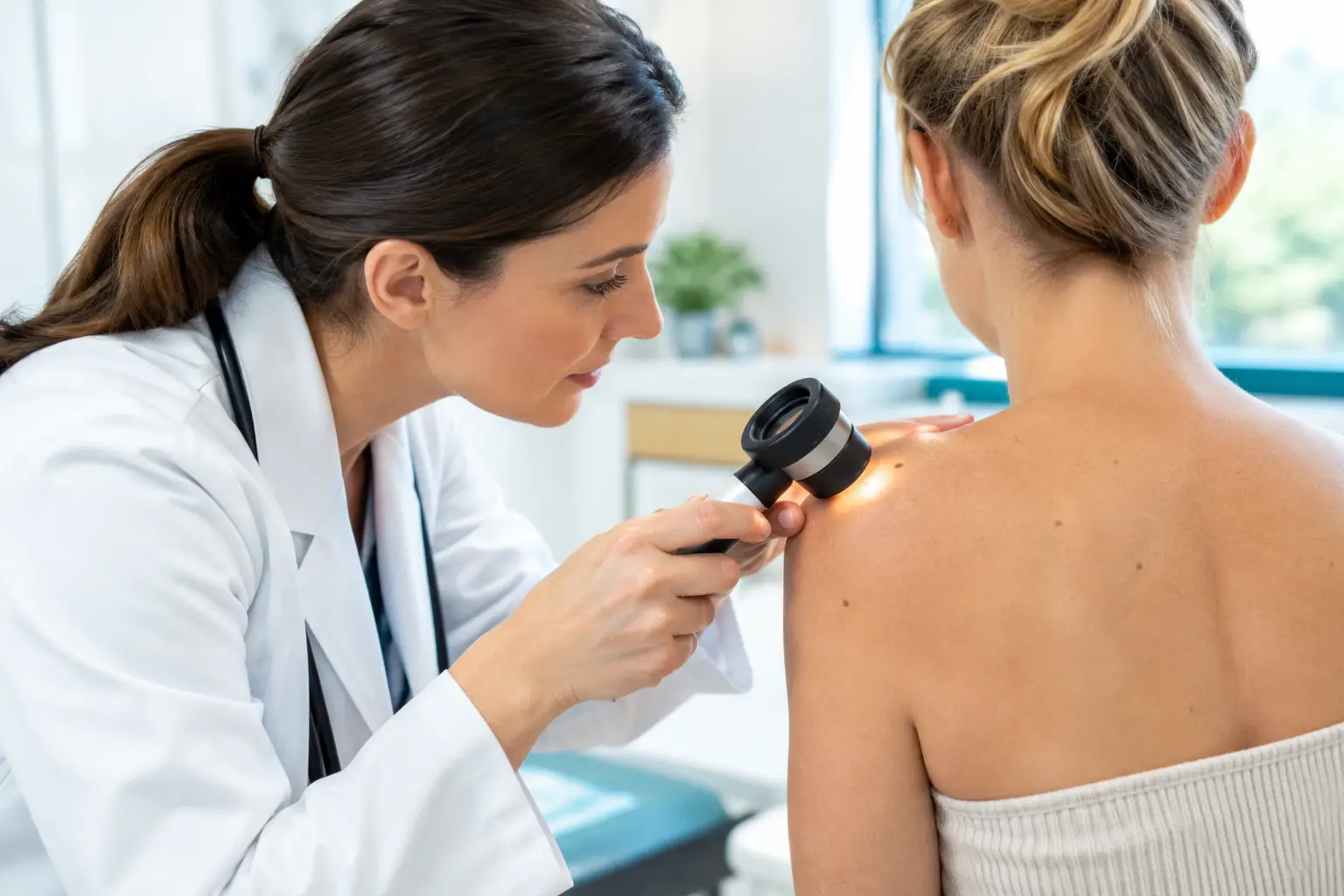
Your GP will usually begin by asking about your concerns, medical history, family history and sun exposure. They may examine the spot you have identified and, depending on the reason for your appointment, recommend looking at other areas of your skin as well.
A dermatoscope, a handheld instrument with magnification and lighting, may be used to examine a lesion more closely. This is painless and helps the doctor see features that are not visible to the naked eye. A skin check does not necessarily mean every spot needs treatment. Many moles, freckles and sunspots are benign, and your GP can explain which ones can be monitored and which require further action.
If a lesion needs closer assessment, the next step may be a follow-up review, photography for monitoring, a biopsy, removal or referral to a specialist. The best option depends on the appearance and location of the lesion, your health history and the procedure required. Your GP should explain the reason for any recommendation, what it involves and any costs or aftercare considerations before you proceed.
Questions worth asking your GP
A skin check should leave you with a clear plan. Ask whether the spot appears concerning, what changes you should watch for and when you should return for review. If a procedure or referral is suggested, ask what will happen next, how results will be communicated and whether you need to take any precautions while waiting.
It can also be helpful to ask how often skin checks are appropriate for you. There is no single schedule that suits every person. Your GP may recommend more frequent checks if you have previously had skin cancer, have many atypical moles, take immune-suppressing medication or have a strong family history. For others, checks may be based on changes they notice and their individual risk profile.
Make skin awareness part of your routine
A professional appointment is valuable, but so is becoming familiar with your own skin between visits. Briefly check areas exposed to the sun as well as less obvious places such as the scalp, between the toes, under the nails and the soles of your feet. If you find something new or changing, arrange an appointment rather than waiting to see if it settles.
For families across Keysborough and surrounding suburbs, a regular GP can provide continuity when a skin concern arises, particularly when they know your health history and previous results. At Parkmore Medical Centre, your GP can discuss concerns, assess suspicious spots and help coordinate appropriate follow-up where needed.
The best preparation is simple: arrive with clean, accessible skin where possible, share what you have noticed and ask the questions that matter to you. A small spot is always worth checking if it does not look or feel right.