
A spot that has changed shape since last summer, a sore that will not heal, or a mole that catches your eye every time you get dressed is worth checking. Dandenong skin checks give you a practical opportunity to discuss these concerns with a GP before uncertainty turns into delay.
Australia has some of the highest rates of skin cancer in the world. While sun exposure is part of everyday life, particularly for people who work outdoors, play sport, garden or spend time with family outside, many skin changes are not obvious at first. A regular check, combined with knowing your own skin, can help identify marks that need closer attention.
Who should consider Dandenong skin checks?
A skin check can be suitable for adults of any age, particularly if you have noticed a new or changing spot. You do not need to wait until something looks alarming to make an appointment. GPs also see patients for reassurance, to establish a baseline of their skin, or to review areas that are difficult to inspect yourself, such as the back, scalp and behind the ears.
It may be especially sensible to book if you have fair skin, have had significant sun exposure or sunburns, use tanning beds now or in the past, have many moles, or have a personal or family history of skin cancer. People taking medicines that lower immune function may also need individual advice about skin monitoring.
Risk is not determined by skin tone alone. Skin cancer can affect people of all skin types, and changes on the palms, soles, nails, lips or areas that are usually covered deserve attention too. The right timing for checks depends on your history and risk factors. Your GP can advise whether a one-off assessment, annual review or more frequent monitoring is appropriate for you.
Changes that should not wait
Some skin changes should be assessed promptly rather than watched for weeks or months. The well-known ABCDE guide can be useful when looking at pigmented spots:
- Asymmetry: one half does not match the other.
- Border: the edge is irregular, blurred or uneven.
- Colour: there are several colours or the colour has changed.
- Diameter: the spot is growing, particularly if it is larger than about 6 mm.
- Evolving: it is changing in size, shape, colour, sensation or appearance.
The guide is helpful, but it is not a complete test. Some concerning spots do not fit the ABCDE pattern. A lesion that is persistently itchy, tender, scaly, crusted, bleeding or failing to heal should be checked. So should an area that looks noticeably different from the other moles or freckles on your body. Clinicians sometimes call this the “ugly duckling” sign – a mark that simply stands out from the rest.
If you have a rapidly changing or bleeding lesion, contact a medical clinic to arrange timely advice. If you are worried, it is always reasonable to say so when booking. This helps the practice understand the purpose of your appointment.
What happens during a skin check?
A GP skin check is a focused medical consultation, not a cosmetic assessment. Your doctor will ask about the spot or spots you have noticed, how long they have been present, whether they have changed and your relevant medical and family history. They may ask about sun exposure, previous biopsies or removals, and medicines you take.
The examination will be guided by your concerns and clinical needs. Depending on the appointment, this may include a review of a single lesion or a broader examination of areas of exposed skin. Wear clothing that is easy to remove or adjust, and avoid covering the area of concern with makeup, fake tan or heavy moisturiser if possible.
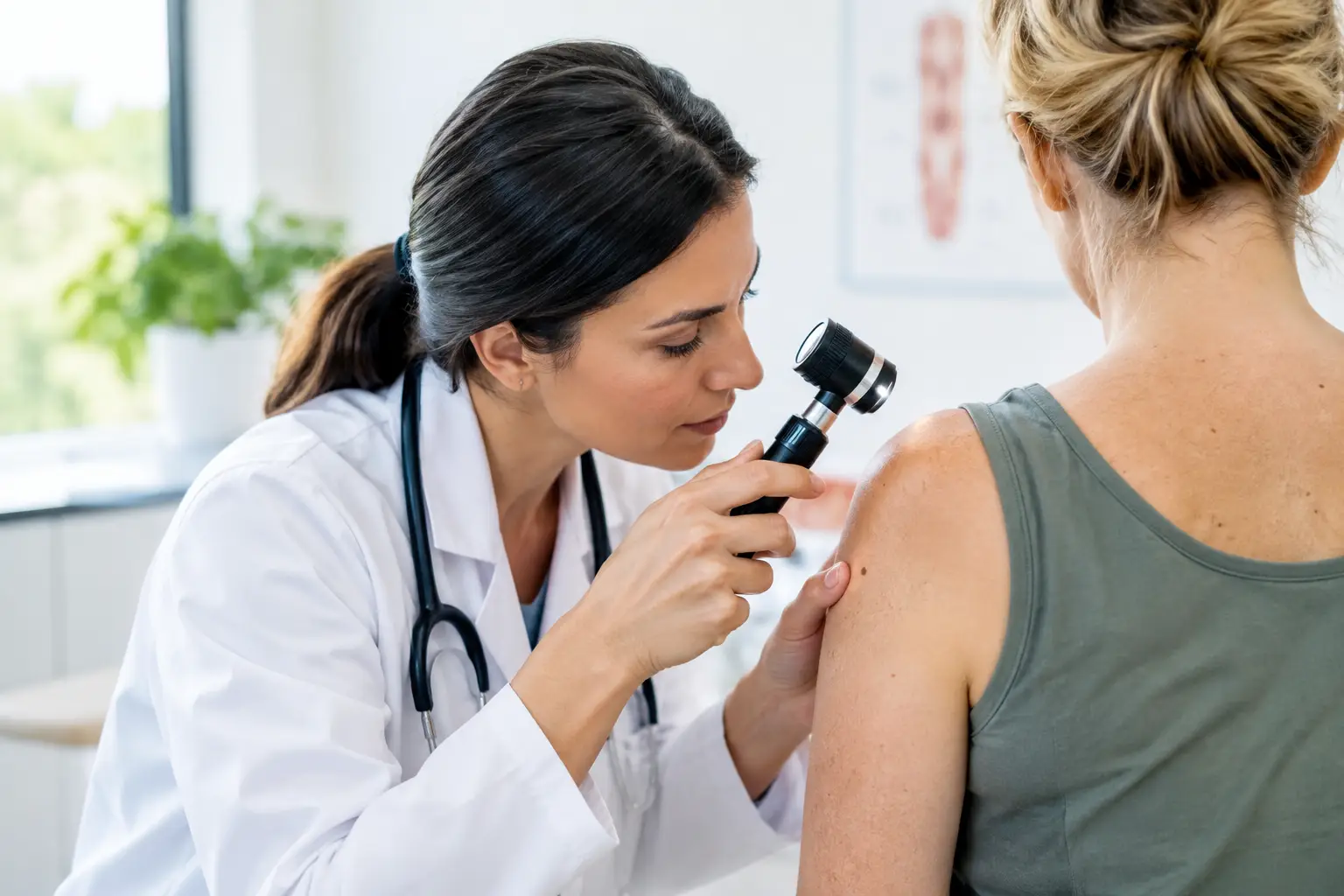
Your GP may use a dermatoscope, a handheld device with light and magnification that helps examine skin structures more closely. It does not hurt and takes only a moment. A dermatoscope can provide additional detail, but it is one part of the assessment alongside your history and the doctor’s clinical judgement.
After examining your skin, your doctor may reassure you that the spot appears benign, recommend monitoring it, take a clinical photograph for comparison where appropriate, or discuss further steps. Depending on the finding, this could include a biopsy, removal, treatment, or referral to a dermatologist or other specialist. Not every mark needs removing, and removal is not always the best first option. The decision depends on how the lesion looks, where it is located, your health history and whether testing is required.
Preparing for your appointment
Bring any relevant information, including details of previous skin cancers, pathology results or specialist letters if you have them. It can also help to note when you first noticed a change and whether the spot has bled, itched, hurt or grown. If possible, photographs taken over time can be useful, provided they are clear and dated.
Let the clinic know when booking if you would like a full skin check or have a particular lesion causing concern. This allows suitable appointment time to be arranged. If you have several spots to discuss, mention this as well. Trying to fit multiple concerns into a short appointment can mean your GP recommends a follow-up visit, which is often the safest and most thorough approach.
For children, parents should seek advice about a mole or skin lesion that is new, changing, bleeding or causing symptoms. Most childhood skin marks are harmless, but a GP can assess the individual situation and guide you on what to watch for.
Skin checks work best with everyday protection
A professional assessment is valuable, but it cannot replace regular sun protection and familiarity with your own skin. Checking your body every few months can help you notice what is new or different. Use a mirror for hard-to-see areas, or ask a partner, family member or trusted friend to check your back and scalp if needed.
Sun protection remains useful year-round in Victoria, not only during beach holidays. When the UV level is high, seek shade where practical, wear protective clothing and a broad-brimmed hat, use sunglasses, and apply broad-spectrum SPF 50+ sunscreen correctly. Sunscreen is one layer of protection, rather than a reason to stay in direct sun for longer.
This is particularly relevant for outdoor workers, parents at weekend sport, gardeners and anyone who spends long periods driving or walking outdoors. Small, repeatable habits can reduce cumulative exposure over time.
Local, coordinated care for skin concerns
For people in Dandenong and surrounding south-eastern suburbs, seeing a regular GP can make skin care easier to manage alongside your broader health needs. Your doctor can consider your medical history, review previous findings and coordinate referrals or follow-up when required.
At Parkmore Medical Centre, skin checks form part of comprehensive general practice care. Whether you have noticed one concerning spot or would like advice about your personal skin cancer risk, booking an appointment gives you the space to discuss it properly with a clinician.
A skin change may turn out to be harmless, but reassurance is most useful when it is based on an examination. If a mark is new, changing, bleeding, painful or simply does not look right to you, arrange a GP appointment and have it assessed.