
A spot on your skin rarely arrives at a convenient time. It might be something you noticed after summer, a mole that looks a little different, or a patch that has not healed properly for weeks. When that happens, finding a skin check clinic Keysborough patients can access easily matters because early assessment can make a real difference.
Skin checks are not only for people with a long history of sun exposure or a strong family history of skin cancer. In Australia, our climate means many people carry some level of risk, even if they are careful now. A good skin check is about catching changes early, getting clear advice, and knowing what needs monitoring versus what needs treatment.
Why a skin check matters in Australia
Australia has one of the highest rates of skin cancer in the world, so skin checks are part of sensible preventive healthcare rather than something to put off until a problem feels serious. Many skin cancers can be treated effectively when found early, while delays can mean more complex treatment later.
Not every unusual mark is dangerous, and that is exactly why proper assessment helps. It is easy to worry about a harmless freckle or dismiss something more concerning as dry skin or ageing. A clinician trained in skin assessment can look at features that are hard to judge on your own, including changes in shape, colour, border, texture and growth pattern.
Regular checks are especially worthwhile if you have fair skin, a history of sunburn, a large number of moles, a personal or family history of skin cancer, or you spend a lot of time outdoors for work or sport. Even then, there is no one-size-fits-all rule. Some people benefit from routine annual checks, while others may need more frequent follow-up depending on their skin and medical history.
What to expect at a skin check clinic in Keysborough
If you have never booked a skin check before, the process is usually straightforward. The appointment begins with a conversation about your skin history, any concerning spots, your sun exposure, and whether you have had previous skin cancers or biopsies.
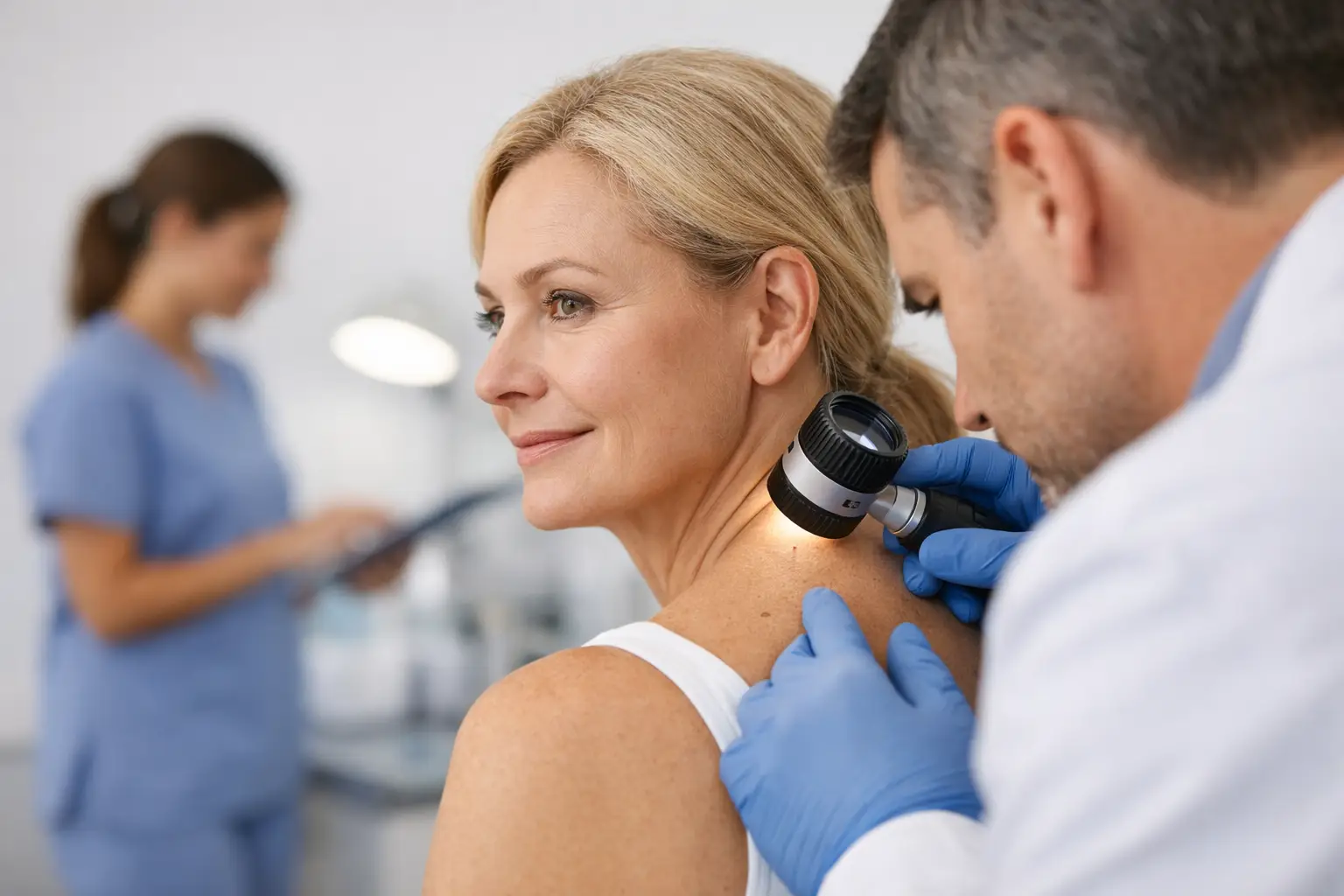
From there, the clinician examines your skin carefully. Depending on the reason for your visit, this may involve a targeted check of one area or a more comprehensive full-body skin check. If you are attending because of a particular mole or lesion, it is still common to assess the surrounding skin and look for any other spots that deserve attention.
A dermatoscope may be used during the examination. This handheld tool helps the doctor look more closely at structures beneath the surface of the skin that are not visible to the naked eye. It can improve accuracy when deciding whether a spot appears benign, should be monitored, or needs a biopsy or removal.
In some cases, you may be told that the spot is not currently concerning and simply needs watching. In others, the doctor may recommend photographing it for comparison at a future visit, arranging a biopsy, or discussing removal. That decision depends on the appearance of the lesion, your risk factors, and whether there has been noticeable change.
Signs that should not wait
Many people delay booking because they are not sure whether a spot is worth checking. If something is changing, persisting or worrying you, it is reasonable to have it assessed. Skin cancers do not always look dramatic.
A prompt appointment is worth considering if you notice a mole that has changed in size, shape or colour, a new lesion that stands out from others on your skin, a sore that does not heal, a scaly or crusted patch, or a spot that bleeds, itches or becomes tender without an obvious reason. Melanoma is often discussed most, but non-melanoma skin cancers can also cause damage if left untreated.
The familiar ABCDE guide can be helpful for moles – asymmetry, border irregularity, colour variation, diameter and evolution. Still, it is only a guide. Some concerning lesions do not fit neatly into those categories, which is why clinical assessment remains important.
Choosing the right skin check clinic Keysborough patients can rely on
Convenience matters, but it should not be the only factor. When choosing a skin check clinic Keysborough locals can return to with confidence, it helps to look for a practice that offers continuity of care, clear follow-up pathways and experienced clinicians who can manage both routine checks and next steps if something needs treatment.
That continuity becomes especially valuable if you need ongoing monitoring. Comparing a lesion over time, reviewing previous notes, and coordinating biopsies or procedures through one clinic can make the whole process less stressful. It also means your skin health is considered alongside your general health rather than in isolation.
For many patients, practical access is just as important. Extended opening hours, online booking, and the ability to organise other healthcare needs through the same medical centre can make it more realistic to keep up with preventive care. Families, shift workers and older patients often choose local clinics for this reason – not because it is merely closer, but because easier access increases the chance that checks actually happen.
How often should you book a skin check?
This depends on your individual risk. Some people book annually as a preventive measure, especially if they have fair skin, outdoor work, or a history of frequent sun exposure. Others may be advised to come back every few months for surveillance of specific lesions or because of a personal history of melanoma or other skin cancers.
If you have never had a skin check and are unsure where you fit, a baseline appointment is a sensible starting point. From there, the doctor can advise whether routine follow-up is needed and how often. That approach is more useful than guessing based on general advice online.
A check is also worth arranging sooner rather than later if you have noticed a recent change. Waiting until your next general appointment can be fine for some concerns, but a changing lesion should not sit on the to-do list for months.
Preparing for your appointment
A little preparation can make your skin check more thorough and efficient. If possible, avoid wearing heavy makeup, nail polish or thick fake tan to the appointment, as these can make assessment harder. If you have taken photos of a changing spot over time, bring them along or keep them ready on your mobile. They can sometimes help show how quickly something has evolved.
It also helps to mention any personal or family history of skin cancer, medications that affect your skin, and previous procedures such as biopsies or lesion removals. If there is one area you are particularly worried about, say so early in the consultation, even if you are also having a broader check.
Some patients feel uncertain about full-body skin checks, especially if it is their first time. That is understandable. A good clinic will approach the appointment respectfully, explain what is involved, and make sure you feel informed throughout the process.
Skin checks as part of ongoing healthcare
Skin health is often treated as a one-off issue, but it sits naturally within regular primary care. A local GP clinic that offers skin checks can also take your broader medical history into account, from medications and immune conditions to previous test results and family risk factors.
That joined-up care can be useful when a lesion needs follow-up, a procedure is required, or another health concern comes up during the visit. For patients managing several health needs at once, having skin checks available within a familiar clinic setting can make preventive care easier to maintain.
At Parkmore Medical Centre, skin checks form part of a broader, patient-centred approach to everyday and preventive healthcare. For local families, older patients and busy workers, that means being able to access assessment, advice and follow-up in one connected care environment.
A local step that can make a big difference
It is easy to postpone a skin check when life is busy, especially if a spot is small or not causing pain. But skin cancer does not always announce itself clearly, and peace of mind is valuable too. Whether you have noticed a specific change or simply want a baseline assessment, booking a timely skin check is a practical way to look after your health.